

Sustainability · 2025
In this section52 topics
- Sustainability Policy & Goals — Overview1 item
- Sustainability Policy3 items
- Sustainability Goals & UN SDGs3 items
- Policy Review4 items
- Impacts on Stakeholders — Overview1 item
- Business Value Chain1 item
- Stakeholder Analysis2 items
- Environmental Policy & Guidelines5 items
- Environmental Policy Review3 items
- Energy — Plan & Guidelines3 items
- Energy — Electricity Consumption1 item
- Energy — Fuel Consumption1 item
- Energy — Targets2 items
- Energy — Performance & Outcomes2 items
- Water — Plan & Guidelines3 items
- Water — Withdrawal, Discharge & Consumption1 item
- Water — Targets2 items
- Water — Performance & Outcomes2 items
- Waste — Plan & Guidelines3 items
- Waste — Generation, Disposal & Recycling1 item
- Waste — Targets2 items
- Waste — Performance & Outcomes2 items
- GHG — Plan & Guidelines3 items
- GHG — Emissions1 item
- GHG — Emissions Verification3 items
- GHG — Principles & Standards1 item
- GHG — Targets2 items
- GHG Targets — Other Targets1 item
- GHG — Performance & Outcomes2 items
- Environmental Legal Incidents1 item
- Other Environmental Management1 item
- Social Policy & Guidelines4 items
- Social Policy Review3 items
- Social — Principles & Standards Practised1 item
- Human Rights Due Diligence3 items
- Employees — Plan & Guidelines3 items
- Employees — Workforce3 items
- Employees — Remuneration & Provident Fund2 items
- Employees — Training & Development2 items
- Employees — Occupational Health & Safety2 items
- Employees — Labour Relations2 items
- Employees — Employee Representation2 items
- Employees — Targets2 items
- Employees — Performance & Outcomes2 items
- Customers — Plan & Guidelines3 items
- Customers — Satisfaction Results2 items
- Customers — Targets2 items
- Customers — Performance & Outcomes2 items
- Community & Social — Plan & Guidelines4 items
- Community & Social — Targets2 items
- Community & Social — Performance & Outcomes2 items
- Law Violation Incidents1 item
Sustainability Policy & Goals — Overview
Introduction
The 2025 sustainability information covers the Company’s operating data for the period from 1 January 2025 to 31 December 2025. It includes subsidiaries in which the Company holds more than 50% of the shares and that remained in operation as of the end of the reporting period, across three core business groups: automotive retail, after-sales service and independent vehicle maintenance services, and car rental and chauffeur services.
Sustainability Policy
Has a Sustainability Policy
Yes
Policy Description
Millennium Group Corporation (Asia) Public Company Limited (the “Company”) is committed to conducting business based on the principles of sustainable development by integrating environmental, social, and governance (ESG) considerations into the Group’s business strategy, operating processes, and organizational culture at all levels. This approach aims to create long-term value for all stakeholder groups, while strengthening competitiveness and supporting stable, sustainable growth. The Company’s sustainability direction is aligned with its “Lifestyle Mobility Ecosystem” business model and a sustainability framework that seeks to balance People, Process, and Profit, and to contribute tangibly to the United Nations Sustainable Development Goals (SDGs).
The Company’s sustainability policy covers three key dimensions: environmental, social, and governance and economic.
Under the environmental dimension, the Company focuses on addressing climate change, improving energy and resource efficiency, managing water and waste, and promoting clean energy and circular economy principles.
Under the social dimension, the Company is committed to respecting human rights, promoting fair employment practices, ensuring safety, occupational health, and an appropriate working environment, developing employee capabilities, enhancing customer satisfaction, and contributing to community development.
Under the governance and economic dimension, the Company upholds transparent, accountable, and verifiable business practices grounded in business ethics, supported by appropriate risk management and internal control systems, to build stakeholder confidence and long-term economic sustainability.
In defining the sustainability direction and action plans, the Company emphasizes stakeholder engagement with both internal and external stakeholders, including shareholders, employees, customers, communities, and business partners. Feedback and expectations are gathered through appropriate channels and incorporated into the Company’s materiality assessment, which considers organizational context, internal and external factors, actual and potential impacts on the business and stakeholders, and impacts on the economy, society, the environment, and human rights. This enables the Company to define sustainability policies, strategies, and implementation plans that appropriately reflect risks, opportunities, and stakeholder expectations.
The Company has also established a sustainability governance structure under the oversight of the Board of Directors and relevant Board committees to supervise ESG performance, risk management, internal control, legal compliance, and corporate governance practices. The Company continuously monitors ESG performance and sets measurable short-, medium-, and long-term targets on key issues such as greenhouse gas emissions reduction, energy and water efficiency, waste management, employee engagement, workplace safety, customer satisfaction, and business ethics, to support balanced, transparent, and sustainable growth for the organization and society.
The Company reports its sustainability performance in line with the Global Reporting Initiative (GRI Standards). The Board of Directors, together with the Risk Governance and Sustainability Development Committee, reviews the Company’s sustainability performance. In 2025, the Company received a SET ESG Ratings assessment at the level of “A” from the Stock Exchange of Thailand.
Policy Document Link
https://www.mgc-asia.com/storage/document/cg-policy/corporate-social-responsibilities-policy-en.pdf
Sustainability Goals & UN SDGs
Has Sustainability Goals
Yes
Goals Description
Environmental Dimension
Climate Change Response | Target for 2025
|
5-Year Target (2026–2030)
| |
Environmental Management | Target for 2025
|
5-Year Target (2026–2030)
| |
Water Management | Target for 2025
|
5-Year Target (2026–2030)
| |
Waste Management | Target for 2025
|
5-Year Target (2026–2030)
|
Social Dimension
Human Capital Development | Target for 2025
|
5-Year Target (2026–2030)
| |
Human Safety and Working Environment | Target for 2025
|
5-Year Target (2026–2030)
| |
Product and Service Quality | Target for 2025
|
5-Year Target (2026–2030)
| |
Supplier Sustainability Engagement | Target for 2025
|
5-Year Target (2026–2030)
| |
Community Development | Target for 2025
|
5-Year Target (2026–2030)
|
Governance and Economic Dimension
Corporate Governance and Business Ethics | Target for 2025
|
5-Year Target (2026–2030)
| |
Cybersecurity and Personal Data Protection | Target for 2025
|
5-Year Target (2026–2030)
| |
Innovation | Target for 2025
|
5-Year Target (2026–2030)
|
UN Sustainable Development Goals
| SDG Goal |
|---|
| Goal 1 No Poverty |
| Goal 3 Good Health and Well-being |
| Goal 3 Good Health and Well-being |
| Goal 5 Gender Equality |
| Goal 5 Gender Equality |
| Goal 6 Clean Water and Sanitation |
| Goal 6 Clean Water and Sanitation |
| Goal 7 Affordable and Clean Energy |
| Goal 7 Affordable and Clean Energy |
| Goal 8 Decent Work and Economic Growth |
| Goal 8 Decent Work and Economic Growth |
| Goal 10 Reduce Inequalities |
| Goal 10 Reduce Inequalities |
| Goal 11 Sustainable Cities and Communities |
| Goal 11 Sustainable Cities and Communities |
| Goal 12 Responsible Consumption and Production |
| Goal 12 Responsible Consumption and Production |
| Goal 13 Climate Action |
| Goal 13 Climate Action |
| Goal 15 Life on Land |
| Goal 15 Life on Land |
| Goal 16 Peace, Justice and Strong Institutions |
| Goal 16 Peace, Justice and Strong Institutions |
Policy Review
Introduction
To ensure effective sustainability performance aligned with evolving business context and stakeholder expectations, the Company regularly reviews its sustainability policy, implementation approach, and sustainability targets to ensure alignment with corporate strategy and to deliver long-term value in a tangible manner.
Policy Reviewed This Year
Yes
Policy Changed This Year
Yes
Review Details
The Company reviews its social responsibility policy and sustainability management targets annually to ensure continued appropriateness in line with business direction, operating environment, evolving risks and opportunities, and the expectations of all stakeholder groups.
To support this process, the Company has established a sustainability working team responsible for monitoring, reviewing, and assessing the appropriateness of the Company’s sustainability policies, targets, and implementation plans, as well as coordinating with relevant functions to gather data and feedback to support improvements aligned with current circumstances and strategic objectives.
During the past year, the Company reviewed its social responsibility policy and sustainability management targets, considering the completeness of material sustainability issues relevant to its operations and the linkage between policy, targets, and implementation across business units, to ensure that sustainability management remains clearly directed, continuously measurable, and appropriately responsive to environmental, social, and governance considerations.
Impacts on Stakeholders — Overview
Introduction
The Company recognizes that business operations throughout the value chain may generate both positive and negative impacts on stakeholders across multiple dimensions, including economic, social, environmental, human rights, and corporate governance aspects. Accordingly, the Company places importance on managing potential impacts on all stakeholder groups in a comprehensive manner across upstream, midstream, and downstream activities, to ensure that the Company’s growth is balanced, responsible, and aligned with the principles of sustainable development.
In this regard, the Company is committed to monitoring, assessing, and managing issues that may affect stakeholders across the value chain, such as customers, employees, business partners and suppliers, communities, shareholders, and government authorities. The Company considers both impacts arising directly from its own operations and impacts that may be linked through business relationships with suppliers and strategic partners. This approach supports transparent, fair, and verifiable business practices and ensures that stakeholder expectations are appropriately addressed throughout the value creation process.
Business Value Chain
Value Chain Description
The Company’s Group has consistently placed importance on fair treatment of all stakeholder groups throughout the business value chain. The Group has established operational practices covering end-to-end activities, including procurement, marketing and sales promotion, sales, product delivery, after-sales services, and related supporting functions. The Company’s Group operates under the principles of good corporate governance and is committed to legal compliance, integrity, transparency, fairness, and verifiability, with the aim of jointly delivering high-quality and efficient services across the entire business process. The Company’s Group’s value chain comprises five (5) core activities and supporting activities that play a key role in enhancing operational effectiveness, as follows:
(1) Core Activities 1) Procurement from Business Partners
The Company’s Group and its subsidiaries enter into importer appointment agreements, dealer appointment agreements, and/or business concession agreements with business partners for the vehicle dealership business and the car rental with driver service business, respectively. The Company’s Group is required to operate in accordance with the partners’ brand standards as stipulated in the agreements. The commercial terms under such agreements are appropriately structured on a fair basis and are aligned with responsible business practices.
2) Sales Promotion Activities
The Company’s Group conducts sales promotion through both offline marketing and online marketing, tailored to target customer segments. These activities can be categorized into two primary approaches:
New customer acquisition
The Company’s Group engages new customers through multiple channels, such as participation in trade fairs and major automotive exhibitions (e.g., Motor Show and Motor Expo), and the organization of MGC-ASIA Auto Fest, an annual marketing event that showcases vehicles across the Group’s businesses to reach customers across a broad range of market segments. Additional activities include roadshows at shopping malls and targeted locations, showroom events, and the use of social media and advertising agencies to communicate effectively with new target audiences. In addition, the Company’s Group develops joint marketing campaigns with business partners to provide customers with added benefits, such as accommodation privileges, discounts offered through financial institutions, or benefits from department stores. Certain sales promotion budgets are also implemented in accordance with guidelines prescribed by individual vehicle manufacturers.
Customer retention and relationship management
The Company’s Group prioritizes ongoing customer relationship management, particularly among premium and luxury customer segments (e.g., BMW, Rolls-Royce, BMW Motorrad, and Harley-Davidson), which typically demonstrate higher repeat-purchase potential. Accordingly, the Company’s Group organizes relationship-building activities on a continuous basis, such as test drive events, golf tournaments, and seasonal special events, to strengthen customer experience and long-term engagement with the brand and the organization.
3) Sales of Products
When customers visit the Company’s Group’s dealerships, sales consultants provide product information and sales proposals in accordance with service standards that are trained and monitored by the relevant vehicle manufacturers. Sales consultants assess customer needs appropriately, including financial terms and other relevant factors, to ensure customers receive complete information and can make informed decisions. Each branch also conducts regular performance review meetings to continuously enhance sales quality and service delivery.
4) Product Delivery
The Company’s Group places importance on a standardized delivery process designed to create a positive customer experience. Sales consultants coordinate delivery appointments based on customer convenience and provide complete information on relevant costs, such as down payments, booking fees, and other charges payable on the delivery date. Prior to delivery, the Company’s Group performs a detailed pre-delivery inspection (PDI) and installs accessories as agreed (e.g., paint protection film, ceramic coating), and ensures the vehicle is properly cleaned and ready for use. Once full payment is completed in accordance with contract terms, the Company’s Group delivers the product at the dealership or arranges delivery as agreed with the customer, and provides guidance on after-sales services and relevant service centers to ensure a continuous customer experience.
5) After-Sales Services
The Company’s Group provides after-sales support through service centers operated under each brand’s dealership network. Services are generally categorized into two main areas: (1) general after-sales maintenance and repair services (e.g., engine systems, suspension systems, air-conditioning systems, and electrical systems), and (2) body and paint services for exterior components. All services are delivered by experienced technicians using modern tools and equipment, under quality standards and controls prescribed by each vehicle manufacturer, to ensure safe, reliable, and high-quality service.
(2) Supporting Activities
To ensure that core activities are conducted effectively and achieve intended outcomes, the Company’s Group places importance on supporting activities, particularly in information technology and human capital development, as follows:
1) Information Technology Activities
The Company’s Group uses information technology as a key enabler to support operations, covering core services such as core applications, messaging, internet, security, network services, server services, desktop services, database services, as well as IT advisory and support services. In addition, the Group leverages information systems to enhance operational efficiency, such as warehouse management systems, customer database management systems, cloud solutions for data storage and processing, and data analytics through data centers to produce management reports (BI reports) and customer analytics to strengthen CRM. IT capabilities also support systematic customer communications through the call center, SMS, and various digital marketing tools.
2) Human Capital Development
The Company places importance on continuously developing employees’ knowledge, skills, and capabilities at all levels and across all functions through both internal and external training programs, delivered via online formats and on-site training. In this regard, the Company has established the Master Automotive Training Center (MAT) as a dedicated training facility and development platform to support business expansion, service center rollouts, and ongoing workforce capability enhancement. Training programs include mandatory and elective courses tailored to job roles, and participation in training is linked to performance indicators (KPIs) for certain positions to promote continuous development.
In addition, the Company develops employees through programs covering key competencies such as management and leadership, finance and accounting, technology and digital skills, sales and service skills, as well as automotive industry-specific knowledge. This enables employees to perform effectively and serves as a critical foundation for the Company’s Group’s long-term success and sustainable growth.
The Company’s Group recognizes that value chain activities may create both positive and negative impacts on stakeholders, including customers, employees, business partners and suppliers, communities, shareholders, and government authorities. Accordingly, the Company’s Group is committed to managing such impacts comprehensively across economic, social, environmental, human rights, and governance dimensions, while maintaining responsible business standards at every stage.
With respect to supply chain management, the Company’s Group is committed to operating transparently, fairly, and in line with business ethics. The Group places importance on respect for human rights, labor protection, safety and occupational health, and environmental stewardship across all stakeholder levels. The Company’s Group has also established clear supplier-related practices under its corporate governance and business ethics policies to ensure consistent implementation across functions.
Furthermore, the Company’s Group has developed a Supplier Code of Conduct, covering key ESG requirements, to serve as a framework for responsible supplier engagement. This framework is integrated into procurement and supplier selection processes, together with regular supplier monitoring and evaluation to assess risks and potential impacts—particularly regarding human rights, labour practices, and environmental issues—and to define appropriate mitigation and management measures where potential issues are identified.
Stakeholder Analysis
Introduction
The Company’s Group places importance on all stakeholder groups across the business value chain, both internal and external. The Group is committed to communicating, engaging, and gathering feedback through appropriate and diverse channels, and to incorporating stakeholders’ input and expectations into the formulation of operating approaches and the enhancement of management processes to ensure effectiveness, transparency, and alignment with good corporate governance principles.
In this regard, the Company’s Group applies the results of its stakeholder analysis to define appropriate responses to the expectations of each stakeholder group, taking into account a balanced approach to business value creation, risk management, and responsible business conduct with due consideration for economic, social, and environmental impacts. Details are as follows.
Stakeholder Analysis
| Stakeholder Type | Stakeholders | Stakeholder Expectations | Response to Expectations | Communication Activities |
|---|---|---|---|---|
| Internal stakeholders | 2913 · Description: Shareholders | 1. Strong operating performance and sustainable business growth
2. Transparent and timely disclosure
3. Good corporate governance
4. Effective risk management | 1. Protect shareholders’ rights and interests
2. Disclose accurate, complete, and timely information
3. Treat shareholders fairly and equally
4. Conduct business with integrity under good corporate governance practices
4. Promoting responsible investment decisions | 2941 · Description: Online Communication · 2944 · Description: Annual General Meeting (AGM) |
| Internal stakeholders | 2921 · Description: Employees | 1. Fair and equal treatment in the workplace
2. Competitive and appropriate compensation and benefits
3. Compliance with labor laws and fair policies
4. A safe and secure working environment (Work-life Balance) | 1. Provide comprehensive employee care and ensure fair and equitable treatment for all employees.
2. Maintain fair recruitment and employment practices, including setting appropriate compensation and benefits in line with job roles, economic conditions, and prevailing market wage rates.
3. Provide appropriate employee welfare in accordance with legal requirements (e.g., social security and provident fund contributions), as well as additional benefits based on employees’ working conditions and needs on an equitable basis, such as medical benefits for parents, dental and vision benefits, childbirth gifts, and health insurance.
4. Implement sales incentive schemes (Sales Incentives), such as performance-based rewards for sales personnel who achieve targets set by the Company’s Group.
5. Promote continuous learning and development through regular training programs and opportunities to develop additional skills to enhance job performance.
6. Establish occupational health, safety, and workplace environment standards and policies.
7. Organize activities to foster employee pride and morale, such as monthly recognition awards for top sales performers or highest profit contributors.
8. Organize internal engagement activities to strengthen organizational relationships, such as Sports Day, Staff Party, and Sales Conference. | 2941 · Description: Online Communication · 2949 · Other name: Whistleblowing channel via email · Description: Others |
| External stakeholders | 2923 · Description: Customers | 1. High-quality products and services
2. Reliable customer service and after-sales support | 1. Establish service standards and operating procedures aligned with applicable brand requirements
2. Provide complete and accurate product and service information
3. Control service quality both pre- and post-sale
4. Comply with the personal data protection policy
5. Maintain ongoing customer relationship activities | 2941 · Description: Online Communication · 2949 · Other name: Dealerships/showrooms and product exhibitions · Description: Others · 2949 · Other name: Call Center · Description: Others · 2949 · Other name: Website and social media channels (LINE, Instagram, Facebook, YouTube) · Description: Others · 2949 · Other name: SMS communications and campaign updates · Description: Others |
| External stakeholders | 2899 · Description: Suppliers | 1. Fair pricing and commercial terms
2. Timely payment
3. Sustainable business practices and reduced environmental impacts | 1. Implement transparent and fair procurement procedures
2. Conduct regular reviews of procurement processes
3. Maintain constructive supplier relationships and comply with agreed commercial terms
4. Operate sustainably in alignment with partners’ objectives to maintain quality and standards on a continuous basis | 2941 · Description: Online Communication · 2943 · Description: External Meeting |
| External stakeholders | 2902 · Description: Community | 1. Prevention and mitigation of potential community impacts
2. Social and environmental responsibility | 1. Implement community support programs (CSR projects), such as donating items to support educational institutions, providing assistance to nearby communities, and organizing quarterly blood donation activities.
2. Promote environmental awareness among employees at all levels through ongoing initiatives, such as plastic bottle donation campaigns to recycle into monks’ robes and used-calendar collection programs. | 2941 · Description: Online Communication · 2949 · Other name: Community support and engagement activities · Description: Others |
Environmental Policy & Guidelines
Introduction
The Company recognizes that climate change, increasing resource consumption, and rising waste generated from economic activities are significant risk factors that may affect the long-term sustainability of the automotive and mobility industries. Accordingly, the Company places importance on systematically managing environmental risks and opportunities through proactive adaptation, improving operational efficiency, and applying environmentally friendly innovation and technologies to create sustainable value, reduce environmental impacts, and strengthen competitiveness in the transition to a low-carbon economy.
The Company views environmental challenges as an opportunity to accelerate its transition toward a low-carbon future. Its operations are aligned with global sustainability trends, relevant standards, and the requirements of business partners that increasingly emphasize energy efficiency and environmental responsibility. In addition, the Company applies circular economy principles across its service centers, showrooms, and warehouses to enhance resource efficiency, reduce waste, and maximize material reuse. The Company also continues to strengthen collaboration with partners, vehicle manufacturers, suppliers, and customers to further align its operations with sustainable growth objectives.
The Company has established both short-term and long-term sustainability management targets, focusing on the following five key areas:
Efficient use of resources
Waste and surplus material management
Greenhouse gas (GHG) emissions reduction
Community engagement
Environmental training and awareness-building
Has an Environmental Policy
Yes
Policy Description
1) Electricity Management
The Company is committed to managing electricity consumption efficiently across its operations, including showrooms, service centers, and offices. The Company promotes energy conservation, the adoption of high-efficiency technologies, and participation by employees at all levels to reduce environmental impacts, support greenhouse gas (GHG) emissions reduction, and continuously enhance operational efficiency.
Practices
Establish appropriate energy conservation measures and action plans for each site, tailored to its operational characteristics.
Regularly inspect, maintain, and improve electrical equipment, lighting systems, and air-conditioning systems to minimize energy losses.
Implement controls to use electricity only as necessary, such as equipment on/off scheduling, switching off lights and appliances when not in use, and limiting usage to essential areas.
Continuously promote responsible energy-use behaviors among employees and reinforce that energy saving is a shared responsibility.
Study and promote the adoption of high-efficiency technologies and suitable renewable energy options in line with the business context to improve long-term energy performance.
2) Water Resources and Water Quality Management
The Company places importance on efficient and responsible water use, as well as controlling wastewater quality to comply with legal requirements. Recognizing water-related risks associated with climate change, the Company aims to minimize environmental and community impacts arising from its operations.
Practices
Establish water-saving measures for all sites, including showrooms, service centers, and offices.
Regularly inspect and maintain plumbing systems, water-use equipment, and leakage risk points to prevent unnecessary water loss.
Install or upgrade water-saving devices, as appropriate, such as high-efficiency taps or flow-control equipment.
Monitor, measure, and control wastewater quality to ensure compliance with applicable laws and relevant standards.
Promote employee knowledge and awareness on water conservation and track water consumption data to support continuous efficiency improvements.
3) Waste and Waste Disposal Management
The Company is committed to systematic waste management across operations, covering both hazardous and non-hazardous waste. The Company applies the principles of waste reduction at source, segregation, reuse, recycling, and lawful disposal to prevent adverse impacts on the environment, health, and safety of employees, customers, and surrounding communities.
Practices
Segregate waste at source by categories, including hazardous waste, non-hazardous waste, and materials suitable for recovery or reuse.
Store, transport, and dispose of hazardous waste generated from operations (e.g., used engine oil, batteries, paint, and chemicals) through licensed operators or qualified parties in accordance with legal requirements.
Promote reduced use of consumable materials, reuse, and recycling of packaging and relevant materials in line with the 3Rs principle and circular economy concepts.
Establish data tracking and regularly review waste management performance to enhance efficiency and continuously reduce waste volumes.
Communicate and promote waste management knowledge among employees, business partners, and relevant parties to raise environmental standards across the value chain.
4) Greenhouse Gas Management and Climate Change
The Company recognizes climate change as a significant risk and opportunity for the business. Accordingly, the Company manages GHG emissions and climate-related issues systematically by integrating them into corporate strategy, risk management, and value chain operations. The Company establishes targets and continuously implements measures to reduce GHG emissions to support the transition to a low-carbon society and strengthen long-term competitiveness.
Practices
Assess climate-related risks and opportunities at both operational and strategic levels, integrating inputs from relevant business units.
Collect, calculate, monitor, and disclose GHG emissions data on an appropriate and continuous basis in accordance with recognised standards or guidelines.
Implement measures to reduce direct and indirect energy-related emissions through improved energy efficiency, adoption of high-efficiency equipment, and increased opportunities for renewable energy use.
Promote the use of clean-energy vehicles and environmentally friendly technologies within the organisation and support services and innovations aligned with a low-carbon society.
Establish short-, medium-, and long-term targets and develop relevant action plans/roadmaps for GHG reduction toward long-term Carbon Neutrality and Net Zero.
Define roles and responsibilities of the Board, management, and employees at all levels to oversee, monitor, and regularly review climate-related performance.
5) Air Quality Management
The Company places importance on controlling and preventing air quality impacts arising from its operations, both within its premises and in surrounding areas, to protect the health and safety of employees, customers, contractors, and nearby communities. The Company is committed to monitoring and controlling air quality in compliance with applicable legal and regulatory requirements.
Practices
Control sources of air emissions from operations (e.g., repair and maintenance activities, energy use, and supporting activities) to remain at appropriate levels.
Monitor air quality and environmental quality at showrooms, service centers, and surrounding areas according to defined schedules or when heightened monitoring is required.
Ensure monitoring results comply with legal standards, relevant Ministry of Industry notifications, and applicable requirements of relevant authorities.
Maintain tools, equipment, ventilation systems, and work areas in a ready-to-use condition to reduce dust, fumes, odors, and impacts on workers and communities.
Where risks are identified or monitoring results do not meet standards, conduct root-cause analysis, implement corrective measures, and follow up in a timely and appropriate manner.
Policy Document Link
https://sustainability.mgc-asia.com/en/home
Environmental Guidelines
| Guideline |
|---|
| Electricity Management |
| Water Management |
| Waste Management |
| Greenhouse Gas and Climate Change Management |
| Air Quality Management |
Environmental Policy Review
Policy Reviewed This Year
Yes
Review Details
In 2025, the Company enhanced its environmental management approach from primarily operational execution to a more systematic management framework that is more closely integrated with the identification and management of climate-related risks and opportunities. Environmental management was positioned as a core component of the Company’s sustainability strategy under the ESG and 3Ps framework. The roles of the Board of Directors and senior management in overseeing environmental and climate change matters were more clearly defined. The Company also strengthened risk assessment at both operational and strategic levels through a more robust combination of bottom-up and top-down assessments.
In addition, the Company further clarified its quantitative targets, particularly in relation to energy and climate change. The Company established a short-term target to reduce Scope 1 and Scope 2 greenhouse gas emissions by 3% compared with the 2022 baseline, and a five-year target (2026–2030) to reduce greenhouse gas emissions from direct and indirect energy use by at least 5% compared with the 2025 baseline. These targets are supported by initiatives to improve energy efficiency, increase the proportion of renewable energy consumption, promote internal EV usage, and develop a roadmap toward long-term Carbon Neutrality and Net Zero. This reflects a shift from general policy-driven actions toward more clearly measurable and accountable targets.
With respect to environmental practices, the Company implemented clearer and more targeted measures in several areas in 2025. These included continued energy conservation initiatives and electricity-saving measures such as the “Be Healthy & Save Energy” campaign, planned maintenance of electrical equipment, automated scheduling for air-conditioning operations, and controls to use lighting only where necessary. The Company also strengthened water management through maintenance of plumbing systems, installation of automated water-saving devices, and enhanced monitoring of wastewater quality to ensure compliance with legal requirements. In waste management, the Company reinforced its commitment to ensuring that hazardous waste is managed in full compliance with applicable laws (100%) on an ongoing basis, while promoting source segregation, reuse of materials, and safe disposal of hazardous waste through licensed service providers.
For air quality management, the Company further defined practices to control and monitor environmental quality within showrooms, service centers, and surrounding areas in accordance with applicable laws and government requirements. Monitoring results are tracked continuously, demonstrating a more tangible enhancement of the Company’s environmental impact monitoring and control system.
Policies & Guidelines Changed
| Change |
|---|
| Electricity Management |
| Water Management |
| Waste Management |
| Air Quality Management |
Energy — Plan & Guidelines
Has an Energy Management Plan
Yes
Plan Description
The Company recognizes that electricity is a critical resource for the Company’s Group’s operations across showrooms, service centers, and offices. Energy consumption is directly linked to (1) operating costs and (2) climate change impacts. Accordingly, the Company has established an energy management approach under its Energy Conservation Policy and its Environmental, Occupational Health and Safety, and Workplace Environment Policy. The approach focuses on efficient energy use, reducing operational energy losses, and encouraging participation by employees at all levels to support the Company’s sustainable growth.
Scope and Operating Principles
The Company’s energy management covers electricity consumption across key operating areas, including showrooms, service centers, offices, and related utilities. The Company places emphasis on the following:
Assessing risks and impacts from both direct and indirect energy use
Defining measures to reduce electricity consumption in daily operations
Continuously improving equipment and system efficiency
Monitoring, reviewing, and evaluating performance to drive continuous improvement
Energy Management Process
The Company implements its energy management plan based on a structured management cycle, with key steps as follows:
Profile Collect and analyze total organizational electricity consumption, including usage patterns by area and key activities.
Identify key drivers and loss points, such as air-conditioning systems, lighting, workshop tools/service center equipment, and utilities.
Define measures and implementation plans covering both technical initiatives and behavioral initiatives. Monitoring and Evaluation Track results against targets and/or the baseline year, and review effectiveness of implemented measures. Review and Improvement Adjust plans and measures based on results and the operating context in each year.
Track results against targets and/or the baseline year, and review effectiveness of implemented measures.
Adjust plans and measures based on results and the operating context in each year.
Key Energy Saving Measures
The Company has implemented electricity management measures at policy, process, and behavioral levels. Key measures include:
Establishing an Energy Conservation Policy as an organization-wide guideline
Promoting energy-saving behavior through the “Be Healthy & Save Energy” campaign, encouraging stair use instead of elevators where appropriate
Implementing a planned preventive maintenance program for electrical equipment to reduce energy losses and extend equipment life
Setting automatic air-conditioning shutdown schedules during 12:00–13:00 and at 17:30 (subject to each area’s operating context)
Switching off lighting during lunch breaks and limiting lighting to essential areas to improve lighting efficiency
Short-term and Long-term Targets
Short-term Target (2025)
The Company targets total electricity consumption of not more than 4,744,708.44 kWh (units), reduced from actual consumption in 2024 of 4,891,452 kWh, representing an approximate reduction of 3%.
Long-term Target (5-year Plan: 2026–2030)
The Company targets a reduction of at least 5% in Scope 1 and Scope 2 greenhouse gas emissions from energy use compared with the 2025 baseline, to be driven by the following key initiatives:
Continuously enhancing energy conservation measures
Increasing the share of renewable energy, as appropriate
Promoting EV usage within the organization
Developing a long-term roadmap toward Carbon Neutrality and Net Zero
Plan Document Link
https://sustainability.mgc-asia.com/en/environmental
Energy — Electricity Consumption
Electricity Consumption
| Metric | Current Year | Previous Year | Two Years Ago |
|---|---|---|---|
| Total electricity consumption within the organization (Kilowatt-Hours) | 5,211,744 | 4,891,452 | 4,981,030 |
| Electricity purchased for consumption from non-renewable energy sources (Kilowatt-Hours) | |||
| Electricity purchased or generated for consumption from renewable energy sources (Kilowatt-Hours) |
Energy — Fuel Consumption
Fuel Consumption
| Metric |
|---|
| Crude oil (Barrels) |
| Coal (Metric tonnes) |
| Jet fuel (Litres) |
| Diesel (Litres) |
| Gasoline (Litres) |
| Fuel oil (Litres) |
| Natural gas (Standard cubic feet) |
| LPG (Kilograms) |
| Steam (Metric tonnes) |
Energy — Targets
Has Set Targets
Yes
Targets
| Target | Base Year | Base Year Value | Target Year | Target Year Value | Target Change (%) | Unit |
|---|---|---|---|---|---|---|
| Reduction of fuel consumption | 2,024 | 4,891,452 | 2,025 | 4,744,708.44 | 3 | Kilowatt-hour |
Energy — Performance & Outcomes
Has Performance Results
Yes
Performance Description
In 2025, the Company’s total electricity consumption amounted to 5,211,744 kWh, increasing from 4,891,452 kWh in 2024, representing an increase of 6.55%. As a result, the Company did not achieve its 2025 electricity consumption target of no more than 4,744,708.44 kWh. Actual consumption exceeded the target by 467,035.56 kWh, equivalent to 9.84% above the defined target.
Although electricity consumption in 2025 was higher than both the prior year and the target, the Company continued to implement energy management measures on an ongoing basis. These measures cover electricity-use controls across operational areas, preventive maintenance of electrical equipment in accordance with plans, awareness campaigns to promote energy-saving behaviors, and participation by employees at all levels. The Company will continue to enhance energy efficiency and review and refine its measures to ensure greater effectiveness going forward. Key initiatives implemented to promote energy conservation include the Energy Conservation Policy, the “Be Healthy & Save Energy” campaign, planned maintenance of electrical equipment, automated air-conditioning on/off scheduling, and switching off lights during lunch breaks and limiting lighting to essential areas, as appropriate.
Water — Plan & Guidelines
Has a Water Management Plan
Yes
Plan Description
The Company recognizes that water security is a key issue for business operations, particularly in Thailand where both drought and flood risks may occur. Accordingly, the Company places importance on efficient water use across all operating sites—showrooms, service centers, and offices—as well as internal activities, in order to ensure appropriate water consumption control, reduce losses, and minimize impacts on the environment and surrounding communities.
The Company has established a water management plan covering prevention, control, and continuous monitoring to enhance water-use efficiency across operational processes and support the Company’s long-term environmental objectives. Key initiatives include:
Implementing ongoing preventive maintenance for plumbing systems and related equipment to reduce the risk of breakdowns and improve water-use efficiency.
Installing water-saving equipment in office areas, such as replacing conventional hand-wash taps with automatic taps to reduce unnecessary water use.
Monitoring and controlling wastewater quality to ensure compliance with legal standards and to prevent impacts on the environment and nearby communities.
Continuously tracking water consumption to assess the effectiveness of measures and refine the approach in the following year, consistent with the Company’s annual disclosure of water consumption data and its 2025 target of no more than 49,706 cubic meters.
The Company set its 2025 water management target to reduce total water consumption by 10% from the 2024 baseline. Based on 2024 water consumption of 55,229 cubic meters, the 2025 target was set at no more than 49,706 cubic meters.
Scope and Operating Principles
The Company’s water management covers water use associated with operations across the Group’s key areas (showrooms, service centers, offices, and operational support activities) and is guided by the following principles:
Prevent and reduce water losses (e.g., leakage and unnecessary water use)
Improve water-use efficiency through technical and behavioral measures
Control wastewater quality to meet legal standards and relevant requirements
Monitor, review, and continuously improve (Continuous Improvement)
Water Management Process
The Company manages water through a structured approach with key steps as follows:
Collect and analyze total water consumption and usage trends by area and key activities.
Identify major water-use points and loss risks, such as leakage risks in plumbing systems and equipment, and high-consumption activities.
Define measures and implementation plans covering prevention, control, and improved water-use efficiency.
Compare consumption results against targets/baseline year and evaluate the effectiveness of implemented measures.
Review factors affecting water consumption and refine measures for the following year.
Key Water Efficiency Measures
The Company implements preventive, technical, and behavioural measures, including:
Ongoing maintenance of plumbing systems and equipment in accordance with maintenance plans to reduce breakdown and leakage risks and minimise water loss.
Installation of water-saving equipment in office areas (e.g., replacement of conventional taps with automatic taps) to reduce unnecessary water use.
Wastewater quality control through monitoring and compliance with applicable legal standards and requirements to minimise impacts on the environment and communities.
Continuous monitoring of water consumption to assess measure effectiveness and support refinement of the approach in subsequent periods.
Short-term and Forward-looking Targets
Short-term Target (2025)
The Company targets total water consumption of no more than 49,706 cubic metres, representing a 10% reduction from the 2024 baseline of 55,229 cubic metres.
Next-step Approach
The Company will use 2025 performance results and lessons learned to review and enhance its water management plan in the next phase, focusing on reducing water losses, improving the effectiveness of water-saving equipment, and continuously strengthening monitoring and performance tracking systems.
Plan Document Link
https://sustainability.mgc-asia.com/en/environmental
Water — Withdrawal, Discharge & Consumption
Water Withdrawal, Discharge & Consumption
| Metric | Current Year | Previous Year | Two Years Ago |
|---|---|---|---|
| Total water withdrawal (Cubic meters) | 51,526 | 55,229 | 64,716 |
| Total water withdrawal by third-party water (Cubic meters) | 51,526 | 55,229 | 64,716 |
| Total water withdrawal by surface water (Cubic meters) | |||
| Total water withdrawal by groundwater (Cubic meters) | |||
| Total water withdrawal by seawater (Cubic meters) | |||
| Total water withdrawal by produced water (Cubic meters) | |||
| Percentage of wastewater treated before discharge (%) | |||
| Total water discharge (Cubic meters) | |||
| Total water discharge to third-party water (Cubic meters) | |||
| Total water discharge to surface water (Cubic meters) | |||
| Total water discharge to groundwater (Cubic meters) | |||
| Total water discharge to seawater (Cubic meters) | |||
| Total water consumption (Cubic meters) | 51,526 | 55,229 | 64,716 |
| Recycled water (Cubic meters) |
Water — Targets
Has Set Targets
Yes
Targets
| Target | Base Year | Base Year Value | Target Year | Target Year Value | Target Change (%) | Unit |
|---|---|---|---|---|---|---|
| Reduction of water withdrawal | 2,024 | 55,229 | 2,025 | 49,706 | 10 | Cubic meters |
Water — Performance & Outcomes
Has Performance Results
Yes
Performance Description
In 2025, the Company’s total water consumption amounted to 51,526 cubic meters, decreasing from 55,229 cubic meters in 2024, representing a reduction of 6.70%. This indicates that the Company’s water control and efficiency measures continued to support year-on-year reductions in water use. According to the Company’s sustainability website, key water management measures include preventive maintenance planning for plumbing systems, the installation of water-saving devices in office areas, and the monitoring and control of wastewater quality to ensure compliance with legal standards. However, the Company did not achieve its 2025 water consumption target of no more than 49,706 cubic meters. Actual consumption exceeded the target by 1,820 cubic meters, equivalent to 3.66% above the defined target.
Although the Company has not yet met its target, 2025 performance continues to reflect a systematic and consistent approach to water management, including reducing water losses, improving equipment efficiency, and reinforcing disciplined resource use across the organization. These efforts provide an important basis for reviewing and strengthening measures and further improving water-use efficiency in the next phase, to continuously support the Company’s environmental objectives and responsible resource utilization.
Waste — Plan & Guidelines
Has a Waste Management Plan
Yes
Plan Description
The Company places importance on managing waste and waste generated from its automotive-related operations, including service centers, maintenance activities, and internal organizational activities. The Company recognizes that inadequate waste management may adversely impact the environment, employee health, and surrounding communities. Accordingly, the Company has established a systematic approach to managing both hazardous and non-hazardous waste, together with waste segregation at source, to support the Company’s sustainability objectives and align with circular economy principles and the 3Rs (Reduce–Reuse–Recycle).
Scope and Operating Principles
The Company’s waste management covers waste generated from key operating areas, including service centers, showrooms, offices, and operational support activities, based on the following key principles:
Control and prevent risks from waste that may affect the environment and safety
Reduce waste at source and increase reuse/recycling
Store, transport, and dispose of waste in compliance with applicable laws, particularly hazardous waste
Monitor, review, and continuously improve waste management effectiveness
Waste Management Process
The Company applies a structured waste management approach with key steps as follows:
Classify waste into hazardous and non-hazardous categories and identify key waste generation points (e.g., service/maintenance operations and office activities).
Establish control measures and segregation practices at source to prevent contamination and improve recycling potential.
Define appropriate storage and transportation procedures, particularly for hazardous waste, in accordance with relevant requirements.
Transfer waste to licensed service providers for safe treatment/disposal in compliance with legal requirements, and maintain relevant supporting documentation.
Monitor results against targets and review measures to improve performance in the following year.
Key Waste Management Measures
The Company implements key measures to ensure effective and legally compliant waste management, including:
Waste segregation at source, separating hazardous and non-hazardous waste, as well as materials suitable for reuse or recycling.
Proper management of waste from service centers, such as used engine oil, batteries, paint, and chemicals, through appropriate storage and transfer to licensed parties for safe disposal/treatment.
Promotion of reuse and recycling, such as packaging materials from spare parts and other recyclable materials, as appropriate to material types.
Communication, training, and awareness-building for employees and business partners on waste segregation and waste management practices, to enhance standards collectively across the value chain.
Short-term and Forward-looking Targets
Short-term Targets (2025)
The Company has established the following waste management targets:
Hazardous waste and hazardous waste materials are managed in full compliance with applicable laws (100%) every year.
Reduce total non-hazardous waste by at least 5% per year. For 2025, the target is no more than 87,419 kilograms, reduced from 2024 performance of 92,020 kilograms.
Short-term Targets (2025)
The Company will use performance results to review and enhance its waste management plan, focusing on waste reduction at source, increased reuse/recycling, and continuous improvement of waste segregation efficiency.
Plan Document Link
https://sustainability.mgc-asia.com/en/environmental
Waste — Generation, Disposal & Recycling
Waste Generation, Disposal & Recycling
| Metric | Current Year | Previous Year | Two Years Ago |
|---|---|---|---|
| Total waste generated (Kilograms) | 70,580 | 92,020 | 85,600 |
| Non-hazardous waste (Kilograms) | 70,580 | 92,020 | 85,600 |
| Non-hazardous waste - Landfilling (Kilograms) | |||
| Non-hazardous waste - Incineration (with energy recovery) (Kilograms) | |||
| Non-hazardous waste - Incineration (without energy recovery) (Kilograms) | |||
| Non-hazardous waste - Other disposal operations (Kilograms) | 70,580 | 92,020 | 85,600 |
| Hazardous waste (Kilograms) | |||
| Hazardous waste - Landfilling (Kilograms) | |||
| Hazardous waste - Incineration (with energy recovery) (Kilograms) | |||
| Hazardous waste - Incineration (without energy recovery) (Kilograms) | |||
| Hazardous waste - Other disposal operations (Kilograms) | |||
| Total reused/recycled waste (Kilograms) | |||
| Reused/Recycled non-hazardous waste (Kilograms) | |||
| Reused non-hazardous waste (Kilograms) | |||
| Recycled non-hazardous waste (Kilograms) | |||
| Reused/Recycled hazardous waste (Kilograms) | |||
| Reused hazardous waste (Kilograms) | |||
| Recycled hazardous waste (Kilograms) |
Waste — Targets
Has Set Targets
Yes
Targets
| Waste Type | Disposal Approach | Target | Base Year | Base Year Value | Target Year | Target Year Value | Target Change (%) | Unit |
|---|---|---|---|---|---|---|---|---|
| Non-hazardous waste | 2758 · Description: Reuse · 2759 · Description: Recycle | Reduce waste volume | 2,024 | 92,020 | 2,025 | 87,419 | 5 | Kilograms |
Waste — Performance & Outcomes
Has Performance Results
Yes
Performance Description
In 2025, the Company’s total non-hazardous waste and non-hazardous residual materials amounted to [xx] kilograms, compared with 92,020 kilograms in 2024, representing a decrease of 23.30%. Based on this performance, the Company achieved its 2025 target of no more than 87,419 kilograms. In addition, the Company’s hazardous waste and hazardous residual materials were managed in full compliance with applicable legal requirements, representing 100%.
The 2025 results reflect the Company’s continued efforts to enhance the effectiveness of waste and waste disposal management, including waste segregation at source, transferring hazardous waste to licensed disposal operators, promoting reuse and recycling of materials, and strengthening environmental awareness among employees and business partners. These efforts help reduce environmental risks, support efficient resource utilization, and promote the Company’s long-term sustainable business operations.
In addition, the Company conducts environmental quality monitoring within its offices and surrounding operational areas at least once a year. In 2025, the monitoring results indicated that air quality, odour, noise, and lighting levels were within normal ranges and complied with applicable legal standards. No incidents of chemical leakage arising from business operations were reported.
GHG — Plan & Guidelines
Has a GHG Management Plan
Yes
Plan Description
The Company recognizes that climate change and increasing environmental pressures have a direct impact on the automotive and mobility industry, which is energy intensive and generates both direct and indirect greenhouse gas (GHG) emissions. Accordingly, the Company has established policy and strategic frameworks for energy management and GHG emissions reduction covering its organizational operations, while also promoting clean mobility technologies and environmentally friendly services to support a tangible transition toward a low-carbon society.
Scope and Implementation Approach
The Company’s GHG management covers emissions arising from organizational operations within the following relevant scopes:
Scope 1: Direct GHG emissions from activities under the Company’s control (e.g., fuel consumption and refrigerants, as applicable to operations).
Scope 2: Indirect GHG emissions from purchased electricity consumption.
The Company links GHG reduction with efficient resource management initiatives, including reducing electricity and water consumption, managing waste in line with the 3Rs (Reduce–Reuse–Recycle), and adopting environmentally friendly technologies at its operational sites. These efforts support the Company’s environmental objectives and align with sustainability trends and national decarbonization direction.
Governance Mechanisms and Climate Risk Management
The Company emphasizes the integration of climate-related issues into corporate governance and risk management. The Board of Directors and senior management have clearly defined oversight responsibilities for environmental and climate matters. The Company assesses climate-related risks and opportunities across the Group through both:
Bottom-up operational assessments to gather risk issues from business units and operating sites; and
Top-down strategic assessments to evaluate current and emerging risks that may affect the business over the medium to long term.
Assessment outcomes are used to define response measures, prioritize action plans, and support ongoing monitoring.
Key Measures to Reduce GHG Emissions (Scope 1 and Scope 2)
The Company drives Scope 1 and Scope 2 emissions reduction through the following key measures:
Energy efficiency improvements, such as adopting high-efficiency equipment and improving systems/processes to reduce energy use.
Increasing renewable energy utilization, as appropriate for each site.
Promoting internal EV usage and supporting environmentally friendly operating practices.
Enhancing the monitoring, measurement, and reporting system for GHG emissions to support target-setting and continuous improvement.
Short-term and Long-term Targets
Short-term Target (2025)
The Company targets a reduction in Scope 1 and Scope 2 GHG emissions of 3% compared with the 2022 baseline.
Long-term Target (5-year Plan: 2026–2030)
The Company targets a reduction in Scope 1 and Scope 2 GHG emissions of at least 5% compared with the 2025 baseline, supported by energy efficiency enhancement, increased renewable energy use, and promotion of clean technologies within the organization.
In addition, the Company will progressively develop and refine a long-term roadmap toward Carbon Neutrality and Net Zero Emissions, as appropriate to its operational context and relevant guidance.
Plan Document Link
https://sustainability.mgc-asia.com/en/environmental
GHG — Emissions
GHG Emissions
| Metric | Current Year | Previous Year |
|---|---|---|
| Total GHG emissions (Metric tonnes of carbon dioxide equivalent) | 4,725.37 | 5,421.8 |
| Total greenhouse gas emissions 1 (Metric tonnes of carbon dioxide equivalent) | 721.25 | 1,707.32 |
| Total greenhouse gas emissions 2 (Metric tonnes of carbon dioxide equivalent) | 2,475.58 | 2,049.09 |
| Total greenhouse gas emissions 3 (Metric tonnes of carbon dioxide equivalent) | 1,528.54 | 1,665.39 |
GHG — Emissions Verification
Emissions Verified by a Third Party
Yes
Verifying Body
3180
Verification Web Page
https://sustainability.mgc-asia.com/en/document/viewer/23/annual-environmental-quality-monitoring-report
GHG — Principles & Standards
Principles & Standards Applied
| Standard |
|---|
| 2677 |
GHG — Targets
Introduction
The Company places importance on climate change management and is committed to reducing greenhouse gas (GHG) emissions from its operations in parallel with sustainable business growth. Accordingly, the Company has clearly defined energy management and GHG emissions reduction targets to serve as a framework for driving the organization, monitoring performance, and continuously enhancing environmental efficiency in both the short and long term. The Company’s targets are designed to be measurable and aligned with responsible business practices under the ESG framework, supporting the long-term transition toward a low-carbon society.
For the short-term target, the Company aims to reduce Scope 1 and Scope 2 GHG emissions by 3% in 2025 compared with the 2022 baseline, accelerating emissions reductions from activities that the Company can manage directly and indirectly through electricity consumption.
For the long-term five-year target, the Company aims to reduce GHG emissions from direct and indirect energy use (Scope 1–2) by at least 5% over the period 2026–2030 compared with the 2025 baseline, supported by key initiatives including upgrading equipment to high-efficiency systems, increasing the share of renewable energy used within the organization, promoting internal adoption of electric vehicles (EVs), and developing a roadmap to guide progress toward long-term Carbon Neutrality and Net Zero.
Has Set GHG Targets
Yes
GHG Targets — Other Targets
Other GHG Targets
| Emission Scope | Base Year | Base Year Emissions | Near-term Target Year | Near-term Target Change (%) | Long-term Target Year | Long-term Target Change (%) | Target Year | Target Change (%) | Unit |
|---|---|---|---|---|---|---|---|---|---|
| 2715 | 2,022 | 4,206 | 2,025 | 3 | 2,030 | 5 | 2,025 | 3 | Metric tonnes of carbon dioxide equivalent |
GHG — Performance & Outcomes
Has Performance Results
Yes
Performance Description
In 2025, the Company’s greenhouse gas (GHG) emissions data were independently verified by BSI Group (Thailand) Co., Ltd. to enhance transparency, accuracy, and credibility in accordance with international standards. The verification report concluded “Verified as Satisfactory” and identified no material issues indicating that the reported GHG emissions data were misstated or not prepared in accordance with ISO 14064-1:2018. The verification statement was issued on 24 February 2026.
The verification scope covered the Company’s GHG emissions data for the reporting period from 1 January 2025 to 31 December 2025, based on an Operational Control approach, and was performed under a Limited Assurance engagement.
In 2025, the Company’s total GHG emissions were 4,725.37 tonnes of carbon dioxide equivalent (tCO2e), summarized as follows:
Scope 1 (direct): 721.25 tCO2e
Scope 2 (energy indirect): 2,475.58 tCO2e
Scope 3 (other indirect): 1,528.54 tCO2e
The verification results reflect the Company’s ongoing enhancement of a systematic environmental data collection and management framework to support target-setting, performance monitoring, and effective implementation of measures to reduce environmental impacts—providing an important foundation for sustainable growth.
The Company will continue to strengthen its environmental performance under the principles of good governance, social responsibility, and balanced management, to further reinforce stakeholder confidence.
Environmental Legal Incidents
Legal Violation Incidents
| Metric | Current Year | Previous Year | Two Years Ago |
|---|---|---|---|
| Number of cases or incidents of legal violations or negative environmental impact (cases) | 0 | 0 | 0 |
Other Environmental Management
Plan Description
Pollution and Environmental Management
The Company recognizes that its business activities—including operational processes, energy consumption, waste generation, and transportation/delivery to customers—may create environmental impacts. Accordingly, the Company is committed to effective environmental management and responsible business practices, focusing on efficient and prudent resource utilization, systematic management of environmental aspects arising from its operational sites, and awareness of its relationship with surrounding communities. These efforts are intended to support sustainable business growth over the long term.
Air Pollution Management Targets
The Company has established environmental targets in alignment with its Environmental Policy and relevant environmental laws and regulations to control and mitigate environmental impacts. These targets are also consistent with the Company’s material sustainability topics, particularly climate change, energy management, and waste management—areas that are prioritized by both the Company and key stakeholder groups. As part of its air quality management, the Company conducts monitoring of key parameters such as particulate matter (PM) and carbon monoxide (CO), among others. The Company focuses on ongoing air quality surveillance within operational areas and verifies that monitoring results comply with applicable standards and requirements under relevant Ministry of Industry notifications. Details of the Company’s 2025 air quality monitoring and analysis results are disclosed in the Environmental Quality Monitoring Report (2025)
Employees — Plan & Guidelines
Has an Employee Management Plan
Yes
Plan Description
(1) Workforce and Labor Management
Fair Treatment of Employees and Workers with Respect for Human Rights
The Company places strong emphasis on labor practices and respect for human rights. It is committed to promoting equality and fairness both within and outside the organization, with ongoing monitoring and vigilance to ensure that the Company’s business operations are not involved in any infringement of individual rights and freedoms, whether directly or indirectly. The Company does not support forced labor, opposes child labor, and treats all stakeholder groups fairly on the basis of human dignity and without discrimination. The Company adheres to internationally recognized principles consistent with the Universal Declaration of Human Rights and the United Nations Guiding Principles on Business and Human Rights (UNGPs). In addition, to foster employees’ sense of belonging as “one family” within the organization, the Board of Directors established an employee engagement development plan during the past year and set a target for the average employee engagement score of not less than 80%.
1) Scope of Human Rights Governance
The Company ensures that respect for human rights covers the operations of the Company and the Group, including individuals and entities connected to its business activities, such as directors, executives, and employees at all levels, as well as affiliated companies, joint ventures, business partners, contractors, and service providers. This approach supports a supply chain that operates in alignment with human rights principles in an appropriate and auditable manner.
2) Monitoring and Risk Review
The Company promotes continuous monitoring of human rights risks and impacts by integrating human rights considerations into internal communications and personnel development processes (e.g., new employee orientation and relevant training programs). The Company also assigns relevant functions to monitor compliance with the Company’s requirements and Code of Conduct as appropriate. Where applicable, the Company integrates human rights risk assessment with the enterprise risk management process and/or supplier assessments to ensure systematic oversight aligned with material risks.
3) Grievance Mechanisms, Remedy, and Follow-Up
The Company provides channels for feedback, complaints, and whistleblowing so that employees and stakeholders can raise concerns regarding potential rights violations in a safe, confidential, and accessible manner. The Company has established processes to review complaints and implement corrective actions and/or remedies as appropriate. Follow-up actions are monitored, and the effectiveness of measures is periodically reviewed to strengthen prevention and reduce the likelihood of recurrence.
In 2025, the Company announced and reinforced the importance of human rights within its Code of Conduct to ensure comprehensive protection and consistent implementation. The Company has established the following guidelines for directors, executives, and employees:
Guidelines
Treat one another equally with mutual respect, and do not discriminate on the basis of differences in gender, race, ethnicity, religion, nationality, age, status, language, or any other factor unrelated to job performance, while supporting an appropriate and safe working environment.
Perform duties with honesty and integrity, and cooperate in preventing risks or impacts that may arise from ethical issues and human rights violations, including compliance with applicable laws and requirements.
Carry out work conscientiously and responsibly throughout all processes—from planning and execution to monitoring—to ensure compliance with the Company’s Code of Conduct and standards.
Do not support, cooperate with, or conceal any act that violates the Code of Conduct or the law; report concerns through the Company’s established channels to strengthen transparency and accountability.
In addition, the Human Resources and Organization Development function has integrated the human rights-related business conduct guidelines into the onboarding program for all new employees, to communicate the Company’s commitment to respecting and upholding human rights and to build awareness of material human rights risks and impacts relevant to business operations.
The Company has established grievance and whistleblowing channels to enable employees and stakeholders to report incidents or concerns appropriately. The Company has also defined an action plan to guide human rights management, as follows:
develop and publish a human rights policy;
establish processes to identify human rights risks and assess potential impacts;
monitor results, integrate actions as appropriate, and communicate the effectiveness of implementation; and
define appropriate remedy and corrective actions for impacts that occur.
Key Labor Rights Principles and Employee Treatment
The Company respects labor rights, including freedom of association and the right to collective bargaining. Employees have full freedom to engage in collective bargaining under a collective bargaining agreement. Key focus areas include:
fair compensation and benefits appropriate to working conditions;
employee development, capability building, and training;
working conditions, safety, and occupational health; and
freedom of opinion and expression within appropriate boundaries.
Employee Welfare and Participation
In addition to statutory benefits, the Company provides supplementary welfare programs to support employees’ quality of life, such as health and accident insurance, assistance in the event of a family member’s death, a provident fund, and travel-related expenses. The Company also provides a welfare canteen offering quality meals at affordable prices. Furthermore, the Company has established a Workplace Welfare Committee as an employee participation mechanism, through which employee representatives can propose suggestions and engage with the employer regarding the allocation of welfare benefits in a manner appropriate to the organization’s context.
Plan Areas
| Plan Area |
|---|
| Fair employee compensation |
| Employee training and development |
| Promoting employee relations and participation |
| Child labor |
| Occupational health and safety in workplace |
Employees — Workforce
Workforce — Introduction
The Company places great importance on employee recruitment and employment as a fundamental pillar for driving sustainable growth. The Company aims to attract and select personnel with the knowledge, capabilities, and potential aligned with its business direction, while promoting job security, continuous skills development, and a suitable and safe working environment that supports employees’ long-term growth. The Company’s recruitment and employment practices are implemented based on the principles of equality, fairness, and non-discrimination to ensure that all personnel are provided with appropriate and equitable opportunities.
Employees with Disabilities — Introduction
The Company places great importance on employee recruitment and employment as a fundamental pillar for driving sustainable growth. The Company aims to attract and select personnel with the knowledge, capabilities, and potential aligned with its business direction, while promoting job security, continuous skills development, and a suitable and safe working environment that supports employees’ long-term growth. The Company’s recruitment and employment practices are implemented based on the principles of equality, fairness, and non-discrimination to ensure that all personnel are provided with appropriate and equitable opportunities.
Workforce Data
| Metric | Current Year | Previous Year | Two Years Ago |
|---|---|---|---|
| Total number of employees (Persons) | 2,758 | 2,669 | 2,952 |
| Number of male employees (Persons) | 1,891 | 1,857 | 2,040 |
| Number of female employees (Persons) | 867 | 812 | 912 |
| Total employment of disabled persons (people) | 26 | 28 | 25 |
| Total disabled employees (people) | 26 | 28 | 25 |
| Total male disabled employees (people) | 14 | 18 | 14 |
| Total female disabled employees (people) | 12 | 10 | 11 |
| Total disabled workers who are non-employee (people) | 0 | 0 | 0 |
| Contributions to the fund for promoting and improving the quality of life for disabled persons | 1 | 1 | 1 |
| Total number of male employees in operational level (Persons) | 1,736 | 1,722 | 1,882 |
| Total number of male employees in management level (Persons) | 151 | 132 | 154 |
| Total number of male employees in executive level (Persons) | 4 | 3 | 4 |
| Total number of female employees in operational level (Persons) | 778 | 749 | 831 |
| Total number of female employees in management level (Persons) | 87 | 60 | 78 |
| Total number of female employees in executive level (Persons) | 2 | 3 | 3 |
Employees — Remuneration & Provident Fund
Introduction
The Company is committed to respecting human rights, equality, and non-discrimination in all forms, and provides fair employment opportunities to all groups, including persons with disabilities, in support of inclusive participation in the workplace and society. The Company seeks to enable persons with disabilities to perform to their full potential by considering suitable job assignments, providing an enabling working environment, and ensuring equal welfare and benefits. This approach forms part of the Company’s commitment to building a diverse, inclusive organization and achieving sustainable shared growth.
In 2025, 100% of the Company’s employees were evaluated against key performance indicators (KPIs), and the promotion rate was 1.38%.
In addition, in 2025, the Company had a total of 16 employees on maternity leave. Of these, 15 returned to work, while 1 did not return, resulting in a post-maternity leave return-to-work rate of 93.75%.
Remuneration & Provident Fund
| Metric | Current Year | Previous Year | Two Years Ago | Remark |
|---|---|---|---|---|
| Total disabled employees (people) | 999,145,322.49 | 1,050,600,000 | 973,500,000 | |
| Total male employee remuneration (Baht) | 687,607,805.46 | 546,300,000 | 535,500,000 | |
| Total female employee remuneration (Baht) | 311,537,517.03 | 504,300,000 | 438,000,000 | |
| Number of employees eligible to participate in PVD (persons) | 2,077 | 2,300 | 2,251 | The number of employees participating in the provident fund (PVD) represent the consolidated figures of the Group. |
| Total number of employees joining employee provident fund (Persons) | 1,141 | 1,375 | 1,298 | |
| Percentage of total number of employees joining employee provident fund to total number of employees (%) | 41.37 | 51.52 | 43.97 | |
| Number of PVD members / Total eligible employees (%) | 54.94 | 59.78 | 57.66 | |
| Total amount of provident fund contributed by the Company (Baht) | 17,169,964 | 19,322,847 | 18,420,372 | The number of the amount of the PVD represent the consolidated figures of the Group. |
| Total amount of provident fund contributed by employee (baht) | 27,706,513 | 28,932,548 | 26,987,524 |
Employees — Training & Development
Introduction
Employee Knowledge and Capability Development and Training
The Company places great emphasis on enhancing the skills, knowledge, competencies, and potential of its employees through training programs and continuous learning opportunities. These initiatives are designed to help employees maximize their potential, ensure equitable access to training, and foster motivation among highly skilled employees to remain with the Company for long-term organizational development. Additionally, the Company prioritizes internal promotions and performance evaluation processes, as these factors are essential to achieving sustainable and robust business growth. To cultivate a strong compliance culture, the Company mandates annual refresher training for all employees at every level. These training programs cover topics such as corporate governance, anti-corruption measures, business ethics and workplace conduct, environmental awareness, and risk management. This ensures that employees adhere to relevant laws, regulations, and internal policies. To facilitate training and employee development, the Company has established the Master Automotive Training Center (MAT), which serves as both a training center and a development hub for personnel. The MAT operates with two primary objectives (1) Supporting business expansion and the opening of new service centers. (2) Ensuring continuous employee development across all levels of the organization.
The Company conducts annual training plans based on a Training & Development Needs Analysis (TDNA), which evaluates the skill gaps of employees in different departments. This structured approach to training enables employees to advance in their careers and equips them with the core competencies necessary for effective management and leadership within the organization. The Company focuses on developing employees in areas aligned with corporate values, communication, and innovation.
Training and Development Programs
The Company has implemented an Individual Development Plan (IDP) as a strategic framework to guide employees in achieving their performance objectives and strengthening their competencies in their respective roles. Additionally, the IDP serves as a preparatory mechanism to equip employees with the qualifications and capabilities necessary for career advancement within the organization. This initiative is a key tool that directly contributes to the Company’s long-term success and goal achievement.
Sales and Service Training Programs: industry-specific training tailored to sales and customer service departments.
Support Function Training Programs: training for administrative teams, human resource development, public relations, finance, and accounting.
Supplementary Skills Development Programs: courses that enhance competencies beyond core job-related skills.
Sustainability (ESG) and Risk Management Training: courses on corporate sustainability principles and risk management, including compliance with industry standards such as ISO 9001, ISO 14001, ISO 27001, and ISO 27701
Legal and Regulatory Compliance Training: courses covering laws and regulations applicable to the Company, including Personal Data Protection Act (PDPA) compliance.
The Company has set a training target of no less than 5 days (40 hours) per employee per year. To achieve this, the Company promotes learning and development through various formats, including seminars, online courses, and hands-on training. These initiatives are designed to enhance employees' knowledge, skills, work attitudes, ethics, and teamwork. Additionally, the Company is committed to developing its workforce to cultivate and prepare personnel for succession planning and internal promotions, with a strong emphasis on nurturing talent from within. This approach is a key factor in ensuring the Company’s stable and sustainable growth.
Training Data
| Metric | Current Year | Previous Year | Two Years Ago | Remark |
|---|---|---|---|---|
| Average employee training hours (Hours / Person / Year) | 12.85 | 13.08 | 13.39 | The Company has restated the data on “Average Training Hours per Employee” for 2023 and 2024 to ensure comparability with 2025 by aligning the calculation methodology. The denominator has been changed from the “number of training participants” to the “total number of employees" in accordance with international sustainability reporting standards. |
| Employee development and training expenses (baht) | 9,509,494 | 13,074,055 | 18,162,313 |
Employees — Occupational Health & Safety
Introduction
The Company has established policies and practices to ensure that employees can work safely, maintain appropriate hygiene, and operate in a good working environment. The Company emphasizes a systematic approach to preventing workplace accidents and work-related illnesses, alongside strengthening a safety mindset through ongoing communication and training. The Company also maintains workplaces to ensure they are sanitary and consistently safe, and encourages employees to maintain good health practices. In addition, the Company promotes work practices that do not adversely affect the health and safety of customers or service recipients.
The Company recognizes that safety and good health are fundamental rights of every employee and therefore continuously places importance on occupational health and safety and the working environment for employees, as well as other relevant stakeholders. The Company has established an occupational health and safety policy to reduce the risks of workplace accidents and work-related illnesses and to appropriately enhance employees’ quality of life.
Safety, Occupational Health, and Workplace Environment Practices
The Company continuously reviews and improves its safety and occupational health operations to align with current business operations and working conditions. These practices are communicated to employees and relevant stakeholders and are implemented consistently. Key practices include:
Encouraging all personnel to comply with rules, requirements, and to cooperate with the Company’s occupational health and safety policies, activities, and workplace environment initiatives.
Complying with applicable occupational health and safety laws and regulations relevant to business operations.
Preventing and reducing fire risks to ensure the safety of employees and surrounding stakeholders.
Allocating and supporting necessary resources to prevent and reduce risks of work-related injuries and illnesses, including risks from working with machinery and chemicals.
Promoting health care and access to health information to support employees’ well-being.
Communicating and disseminating information on occupational health and safety performance and policies to communities and stakeholders throughout the supply chain, as appropriate.
Fostering occupational health and safety awareness among personnel at all levels.
Aiming to reduce work-related injuries and fatalities among employees, business partners, and contractors working on the Company’s premises by continuously controlling and monitoring work-related risks.
Encouraging participation by workers and employee representatives through activities, consultations, and feedback mechanisms.
Management Approach
Occupational health, safety, and workplace environment management is overseen by the Company’s Occupational Safety, Health, and Environment Committee (SHE Committee). An authorized representative appointed by top management is responsible for driving policy implementation and ensuring effective execution. The Company holds regular meetings between employer representatives and employee representatives and reports results to management in accordance with established procedures.
In addition, the Company has certified professional safety officers who inspect, monitor, provide recommendations, and report on occupational health and safety performance to support governance and continuous improvement.
Risk Assessment and Control Measures
The Company conducts occupational health and safety risk assessments through hazard identification, risk evaluation, and the determination of control measures. This process identifies risks and opportunities across work processes, activities, and relevant areas, including significant machinery, equipment, and contractor operations. The assessment covers normal, abnormal, and emergency situations. Appropriate risk controls are then established to reduce the likelihood and potential impacts of incidents.
The Company also establishes risk management measures, communication plans, surveillance, and monitoring mechanisms, and ensures that all operators are informed before commencing work so that operations are safe and compliant with relevant requirements.
Workplace OHS Risk Assessment Process
The Company conducts systematic workplace inspections and OHS risk assessments, led by certified professional safety officers who identify hazards, assess risk levels, and define appropriate control measures by job type, activity, and risk area. This helps prevent accidents and work-related illnesses and reduces impacts on assets and business continuity.
Risk Assessment Steps
Defining job types / activities
Hazard Identification
Risk Assessment
Defining an Acceptable Risk Level
Determining Risk Control Measures
Monitoring & Evaluation
Review
Hierarchy of Control
When determining controls, the Company follows the hierarchy of control from highest to lowest effectiveness:
Elimination
Substitution
Engineering Controls Management Controls Personal Protective Equipment (PPE)
Risk Assessment Results and Key Controls
Based on the 2025 (B.E. 2568) assessment, the Company identified accident risks primarily related to: working with machinery in service and maintenance operations, the use/storage of chemicals, and the workplace environment. The assessment covers employees, business partners, contractors, visitors, and other persons working within Company premises, as such risks may affect business continuity. Key measures include:
Minimum PPE requirements: defining minimum PPE by job type/risk area and enforcing strict use before and during work.
Material/chemical storage and machinery maintenance: providing suitable containers, clearly designated storage areas, regular inspections, and preventive maintenance according to plan.
Workplace improvements and risk area identification: improving operational areas and installing warning/notice signs at risk points to mitigate accident risks.
Training and safety culture: conducting regular training and refreshers on correct work methods, machinery work, and chemical handling for employees, partners, contractors, visitors, and relevant parties; and organizing safety promotion activities to reinforce awareness continuously.
Key OHS and Workplace Environment Programs
In 2025 (B.E. 2568), the Company implemented programs and activities to strengthen employee awareness of operational risks, focusing on accident prevention, risk reduction, and the enhancement of a safety culture through training, communication, and ongoing monitoring. Key highlights include:
1) Training and Communication to Strengthen a Safety Culture
“Zero Accident” Safety Promotion Program
The Company has continuously implemented the “Zero Accident” program annually. In 2025, the program emphasized building safety awareness, identifying and eliminating workplace hazards across all job categories, and improving working conditions to support employees’ happiness and safety while continuously reducing workplace accidents.
Work-related fatality rate among employees, business partners, and contractors working on Company premises: None
Target (0 cases per 1,000,000 working hours) | 2023 | 2024 | 2025 |
Injury Frequency Rate (I.F.R.) (Lost Time Injuries Frequency Rate) | |||
Employee | - | 5.49 | 4.25 |
Contractor/Business Partners | - | - | - |
Injury Frequency Rate (I.F.R.) (Lost Time Injuries Frequency Rate) | |||
Employee | |||
Contractor/Business Partners | - | 8.24 | 6.21 |
Occupational Health, Safety, and Working Environment
Item | 2023 | 2024 | 2025 |
Number of work-related fatalities (person) | 0 | 0 | 0 |
Number of Lost Time Injury (LTI) case (time) | 0 | 0 | 0 |
Safety awareness in new-employee orientation
The Company includes safety, occupational health, and operational risk management content in its orientation program to ensure new employees understand relevant requirements and practices from the start.
Fire Fighting – Basic Training
The Company provides training on fire theory, fire classes, appropriate extinguishing methods, ignition source prevention, extinguisher use, and PPE for firefighting. Training aligns with the Ministerial Regulation on OSH management standards for fire prevention and suppression (B.E. 2555). In 2025, 1,680 employees completed basic fire-fighting training, representing 90%.
2) OHS and Workplace Environment Inspections
In 2025, the Company conducted workplace environment measurements and assessments as required by law to ensure that all employees and workers operate in appropriate and non-hazardous conditions. The latest measurements were within legal standards. The Company also provides PPE, emergency equipment, and first-aid kits suitable for job characteristics and risk levels in each area.
Summary of Environmental, Occupational Health, and Safety Measurement Results
Measurement Item | Result |
|---|---|
Workplace air quality measurement | ✓ |
Workplace noise level measurement | ✓ |
Wastewater quality measurement | ✓ |
Stack exhaust air quality measurement | ✓ |
Workplace lighting intensity (area-based) | ✓ |
Workplace lighting intensity (workstation standard points) | ✓ |
Workplace heat and humidity measurement | ✓ |
Note: ✓ = within standard limits; X = outside standard limits
Occupational Health & Safety Data
| Metric | Current Year | Previous Year | Two Years Ago |
|---|---|---|---|
| Total number of lost time injury incidents by employees (Cases) | 0 | 0 | 0 |
Employees — Labour Relations
Introduction
The Company places great importance on strengthening employee engagement and fostering internal cohesion by supporting activities that promote positive relationships, teamwork, and an organizational culture that encourages participation at all levels. In 2025, the Company organized the Sports Day Jersey Design Project and the MGC Sport Day (Theme: “Amazing People”). The Company provided a budget to support these activities, which included a sports-day jersey design contest and recreational/sporting activities aimed at strengthening relationships among employees, management, and the Company, as well as promoting employees’ physical and mental well-being.
To ensure that the Company’s human resources initiatives and measures appropriately support employees’ quality of life and well-being, the Company conducted an employee engagement survey through the Voice of Employee (VOE) Program for 2025. Employee feedback was analyzed to define improvement and development actions, and the results were presented to the Company’s management to support oversight and the continuous enhancement of human capital management.
The Company also has plans to further develop and enhance employee engagement through projects and activities aligned with the Company’s policies, with a focus on promoting employees’ physical and mental well-being and creating a work environment that supports participation and long-term growth.
Item | 2023 | 2024 | 2025 |
|---|---|---|---|
Employee engagement assessment result | 87 | 85 | 86 |
Labour Relations Data
| Metric | Current Year | Previous Year | Two Years Ago |
|---|---|---|---|
| Total voluntary resignations (Persons) | 605 | 659 | 521 |
| Male employees who voluntary resigned (Persons) | 308 | 328 | 234 |
| Female employees who voluntary resigned (Persons) | 297 | 331 | 287 |
| Percentage of employee turnover leaving the Company voluntarily (%) | 21.94 | 24.69 | 17.65 |
| Evaluation result of employee engagement | 1 | 1 | 1 |
Employees — Employee Representation
Employees Are Represented Collectively
Yes
Forms of Representation
| Form |
|---|
| Welfare committee |
Employees — Targets
Has Set Employee Targets
Yes
Targets
| Indicator | Target Areas | Base Year | Base Year — Description | Target Year | Target Year — Description |
|---|---|---|---|---|---|
| - All new employees completed the Company’s Business Code of Conduct and Human Rights training and passed the post-training assessment (100%). - Employees received an average of at least 5 training days (40 hours) per person per year. - Employee engagement score was maintained at no less than 80%. - Zero Accident target: 0 work-related accidents or fatal injuries (covering employees, business partners, and contractors working on the Company’s premises). | 2984 · Description: Employee training and development · 2985 · Description: Promoting employee relations and participation · 2988 · Description: Safety and occupational health at work | 2,024 | - All new employees completed the Company’s Business Code of Conduct and Human Rights training and passed the post-training assessment (100%).
- 50% of the Company’s employees completed the Business Code of Conduct and Human Rights training and passed the post-training assessment.
- Employees received an average of at least 5 training days (40 hours) per person per year.
- Employee engagement score was maintained at no less than 80%.
Zero Accident target: 0 work-related accidents or fatal injuries (covering employees, business partners, and contractors working on the Company’s premises). | 2,025 | - All new employees completed the Company’s Business Code of Conduct and Human Rights training and passed the post-training assessment (100%).
- 50% of the Company’s employees completed the Business Code of Conduct and Human Rights training and passed the post-training assessment.
- Employees received an average of at least 5 training days (40 hours) per person per year.
- Employee engagement score was maintained at no less than 80%.
Zero Accident target: 0 work-related accidents or fatal injuries (covering employees, business partners, and contractors working on the Company’s premises). |
Employees — Performance & Outcomes
Has Performance Results
Yes
Performance Description
The Company places great emphasis on employee and workforce management as a key driver of sustainable organizational growth. The Company aims to continuously enhance workforce capabilities in line with its business direction and the ongoing transformation of the automotive industry. To this end, the Company established the Master Automotive Training Center (MAT) as a hub for developing automotive and service capabilities in accordance with OEM standards, supporting business expansion and new branch openings. MAT also strengthens employees’ knowledge and skills across all functions—sales and service, support functions, future skills, management and leadership—as well as training on relevant laws and international standards such as PDPA, ESG, Risk Management, and ISO. The Company designates training and skills development as part of the performance evaluation indicators for each function to promote continuous learning and effective application in day-to-day operations.
In 2025, the Company continued to place importance on strengthening employees’ knowledge and understanding of business ethics, human rights, and anti-corruption through both new employee orientation and quarterly training sessions. A total of 383 new employees completed the training and passed the assessment, representing 100% of all new employees. In addition, 1,287 employees out of a total workforce of 2,758 completed the training and passed the assessment, accounting for 46.66% of all employees.
In addition, the average training hours per employee were 12.85 hours per person per year, with total training expenses amounting to Baht 9,509,494. The Company also revised the calculation methodology for historical data for 2023, 2024 and 2025 by applying the same criteria as in 2025 to ensure consistency, comparability, and alignment with sustainability disclosure practices.
In addition, the Company has embedded risk management as part of its corporate culture by continuously communicating and promoting knowledge and understanding of risk management among employees at all levels, from the Board of Directors, executives, managers and/or supervisors, to operational staff. The number of participants in such training comprised 2 executives, 1 manager, and 13 employees.
To enhance quality of life and employee engagement, the Company conducted an annual Voice of Employee (VOE) engagement survey in 2025, with participation representing 86% of total employees. Feedback from employees was analyzed and used to continuously improve human resource management practices and the working environment.
With respect to labor rights and fair labor practices, the Company is committed to equality, fairness, and respect for human dignity across all stakeholder groups. The Company does not support forced labor, opposes child labor, and does not tolerate discrimination in any form. It provides grievance and whistleblowing channels that are safe, transparent, and trackable, and protects complainants from retaliation. Human rights management is implemented systematically through group-wide policies, Human Rights Due Diligence (HRDD), and ongoing monitoring. In 2024, the Company recorded no complaints or reports related to human rights violations, and no incidents of discrimination or harassment within the organization.
With regard to safety, occupational health, and the working environment, the Company is committed to fostering a “Zero Accident” culture and places the highest priority on the safety of employees, technicians, contractors, customers, and relevant stakeholders. To this end, the Company has continuously implemented proactive measures, including the provision of personal protective equipment (PPE), the designation of appropriate storage areas for materials and equipment, improvements to working conditions, the installation of warning signs in high-risk areas, and the cultivation of safety awareness from the orientation program for new employees. In 2025, a total of 716 employees completed basic fire-fighting training, and workplace environmental conditions were regularly monitored in accordance with legal requirements.
For 2025, the Company reported zero work-related fatalities and zero serious work-related accidents/injuries resulting in lost time. The injury frequency rate (I.F.R.) was 4.25, and the injury severity rate (I.S.R.) was 6.21.
Customers — Plan & Guidelines
Has a Customer Management Plan
Yes
Plan Description
The Company is committed to managing customer relationships in a systematic manner throughout the entire product and service lifecycle, from the provision of information prior to purchase decisions, sales, and delivery, to after-sales services, feedback collection, and personal data protection. This is to ensure that customers receive a positive experience, maintain confidence in the Company’s products and services, and develop long-term relationships with the brand. The Company places importance on building and sustaining strong customer relationships on a sustainable basis, while striving to deliver positive experiences at every service touchpoint.
1) Responsible Customer Service
The Company has established guidelines for the responsible delivery of products and services, taking into account quality, safety, transparency, and suitability to customers’ needs. These guidelines cover all stages of the customer journey, from consultation, test drives, and vehicle delivery to after-sales services, with the aim of creating positive experiences and long-term trust. In this regard, the Company is committed to operating in line with its mission of “Striving for Excellence” across its people, work processes, products, and services in order to continuously enhance service standards.
In its operations, the Company analyzes service data and customer feedback to improve work processes and ensure consistency across all customer touchpoints, while enhancing convenience, speed, and service efficiency. This supports customer satisfaction and fosters sustainable relationships between customers and the Company.
2) Communication of Information on Product and Service Impacts to Customers
The Company places importance on communicating product and service information to customers in an accurate, clear, and sufficient manner to support informed decision-making. This includes information on usage, service terms and conditions, maintenance, access to after-sales services, as well as other information necessary for the proper and safe use of products and services. The objective is to ensure that customers have a correct understanding and are able to derive maximum benefit from the Company’s products and services, under the principles of transparency and consumer responsibility.
In addition, the Company continues to develop communication channels and service accessibility in line with consumer behavior in the digital era, such as online service channels, advance service center appointment systems, and convenient contact channels. These measures enable customers to inquire, receive advice, or communicate their needs quickly and efficiently.
3) Enhancing Customer Satisfaction and Strengthening Customer Relationships
The Company continuously plans and implements initiatives to enhance customer satisfaction and strengthen customer relationships by applying customer relationship management (CRM) systems and data analytics to better understand the needs of different customer segments. The insights obtained are then used to improve products, services, and the overall customer experience, thereby supporting customer retention and fostering long-term brand loyalty.
To build long-term relationships, the Company uses its Loyalty Program as a mechanism to provide appropriate benefits and experiences to customers who continue to use its products and services. The Company also monitors customer satisfaction across both the sales service group and the service group through designated channels, and uses the results to analyze and continuously improve service processes for greater effectiveness.
4) Protection of Customers’ Personal Data
The Company places great importance on safeguarding the security of customers’ personal data and recognizes that the protection of personal data relating to customers, employees, business partners, and stakeholders is a critical issue in the digital era. The Company has therefore established appropriate guidelines for the collection, use, disclosure, and retention of personal data based on the principles of necessity, security, and accountability, in order to strengthen the confidence of customers and stakeholders.
In addition, the Company promotes awareness among relevant personnel of the importance of maintaining the confidentiality of customer information and exercising due care in the use of such data. This is undertaken in parallel with the continuous review of processes and internal control measures to ensure effective data management, in line with transparent business operations and the long-term expectations of stakeholders.
Plan Areas
| Plan Area |
|---|
| Responsible production and services for customers |
| Communication of product and service impacts to customers/consumers |
| Development of customer satisfaction and customer relationship |
| Protection of customer personal information |
Customers — Satisfaction Results
Introduction
Customer Relationship Management and Customer Satisfaction
The Company’s Group focuses on building and maintaining strong customer relationships throughout the customer lifecycle by systematically managing customer data and interactions. This approach aims to enhance product and service quality, increase customer satisfaction and loyalty, and support the mission of “Striving for Excellence (People & Partners / Processes / Products & Services).”
Management Approach
To ensure that service improvement effectively meets customer needs amid intense competition, the Company’s Group manages customer relationships through the following key approaches:
1) Systematic Customer Data Management
The Company’s Group collects and utilizes customer data through a Customer Relationship Management (CRM) system to support customer engagement, service history tracking, and data processing/analytics, enabling continuous service improvement.
2) Communication Channels and Handling Complaints/Suggestions
The Company’s Group provides channels to deliver information, respond to inquiries, and receive customer complaints to ensure prompt and appropriate issue resolution. Feedback from complaints and suggestions is used to review workflows and enhance service quality.
3) Building Customer Loyalty through a Loyalty Program
The Company’s Group implements point accumulation and benefit programs to strengthen customer loyalty to the brand and encourage customer engagement, focusing on delivering a consistent and relevant customer experience across products and services.
4) Customer Satisfaction Surveys and Feedback Loop
The Company’s Group conducts customer satisfaction surveys via the Contact Center to reflect customer satisfaction levels and applies the results to improve service quality, develop sales and service staff capabilities, and enhance process efficiency—supporting long-term relationships and engagement.
Innovation Management to Deliver an Enhanced Customer Experience
The Group places significant importance on the development and application of innovation and technology to enhance customer experience, respond to rapidly evolving consumer behavior, and improve resource efficiency. The Group’s key approaches are as follows:
Promoting an innovation-driven culture across the organization by encouraging employees at all levels to contribute new ideas and participate in the continuous improvement of work processes.
Enhancing innovation capabilities through ongoing training and development programs.
Applying digital technologies in sales and service operations, such as systems and applications for vehicle reservations, service appointment scheduling, repair and maintenance status tracking, and after-sales support.
Strengthening communication and service delivery through automation, with plans to introduce chatbot and voicebot solutions to improve speed, continuity, and responsiveness of services, while also supporting data collection for customer behavior analysis and service enhancement.
Leveraging Generative AI to improve the efficiency of multilingual communication, including English, Chinese, and Russian, through avatars, voiceovers, and subtitles, in order to support customer communication in a manner appropriate to each target group.
Customer Satisfaction Results
| Metric | Current Year | Previous Year | Two Years Ago |
|---|---|---|---|
| Evaluation results of customer satisfaction | 1 | 1 | 1 |
Customers — Targets
Has Set Customer Targets
Yes
Targets
| Indicator | Target Areas | Base Year | Base Year — Description | Target Year | Target Year — Description |
|---|---|---|---|---|---|
| The Company set customer satisfaction targets for two groups: (1) the sales service group; and (2) the after-sales/service group. | 3009 · Description: Development of customer satisfaction and customer relationship | 2,024 | The customer satisfaction target was set at no less than 85%. | 2,025 | - The sales service group recorded an average customer satisfaction score of 96%.
- The service group recorded an average customer satisfaction score of 93%. |
Customers — Performance & Outcomes
Has Performance Results
Yes
Performance Description
In 2025, the Group continued to advance its customer management efforts by focusing on building strong and lasting relationships with customers across every stage of the Customer Journey, from consultation and test drives to vehicle delivery and after-sales services. These efforts were aimed at enhancing the customer experience, building trust, and fostering long-term brand loyalty. To this end, the Group implemented a Customer Relationship Management (CRM) system together with data analytics to collect and analyze the needs of each customer segment, and to use such insights to improve products, services, and work processes in a manner that effectively aligns with customer behavior and expectations.
In addition, the Group further developed its service channels to align with customers’ lifestyles in the digital era, including online services, advance service center appointment systems, and convenient contact channels accessible anytime and anywhere. These initiatives were undertaken in parallel with the implementation of a Loyalty Program to provide appropriate privileges and experiences to customers who continue to use the Group’s services. This has served as an important mechanism for strengthening brand engagement and increasing the likelihood of repeat service usage.
In 2025, the Group also conducted customer satisfaction surveys through its Data Center, covering both sales customers and service customers. The survey results were analyzed and used as key inputs for improving work processes, enhancing service standards, and continuously developing personnel capabilities. The results showed that the sales service group achieved an average customer satisfaction score of 96%, while the service group recorded an average score of 93%, reflecting the effectiveness of the Group’s customer experience management and its ability to respond appropriately to customer needs.
Community & Social — Plan & Guidelines
Has a Community & Social Plan
Yes
Plan Description
Communities and society are key stakeholders to whom the Company attaches great importance. The Company is committed to building strong relationships and creating shared value through responsible business conduct alongside sustainable community and social development. This approach is intended to strengthen confidence and trust, while supporting harmonious coexistence over the long term. Management Approach
In 2025, the Company focused on being a good corporate citizen and maintaining close care for communities surrounding its operating areas. The Company placed importance on the environment, health, well-being, and safety of local communities, while supporting activities that appropriately respond to community needs. In this regard, the Company pursued the following key approaches:
Conducting assessments of community needs and material issues of concern at least once every two years. Incorporating community concerns and expectations into action plans and responsive initiatives.
Encouraging employees to continuously participate in community and social initiatives.
Operational Strategies
Promoting the participation of employees and relevant stakeholders in jointly advancing sustainability for society.
Continuously supporting community and social development through projects that generate positive social and environmental outcomes.
Plan Document Link
https://sustainability.mgc-asia.com/en/social
Plan Areas
| Plan Area |
|---|
| Occupational health, safety, health, and quality of life |
| Disadvantaged and vulnerable groups |
Community & Social — Targets
Has Set Community & Social Targets
Yes
Targets
| Indicator | Target Areas | Base Year | Base Year — Description | Target Year | Target Year — Description |
|---|---|---|---|---|---|
| - Zero community-related complaints - Community satisfaction score of 85% | 3045 · Other name: Community satisfaction score · Description: Others | 2,024 | - Zero community-related complaints
- Community satisfaction score of 90% | 2,025 | - Zero community-related complaints
- Community satisfaction score of 86.7% |
Community & Social — Performance & Outcomes
Has Performance Results
Yes
Performance Description
1) “Pun Kan Pun Suk” Project
MGC-ASIA promotes a culture of sharing and efficient resource utilization by collecting donated items from employees and related parties and converting them into educational scholarships through donations to the Yuvabadhana Foundation. This initiative supports underprivileged children and youth in gaining continued access to education, while also encouraging employees to participate in sustainable social contribution.
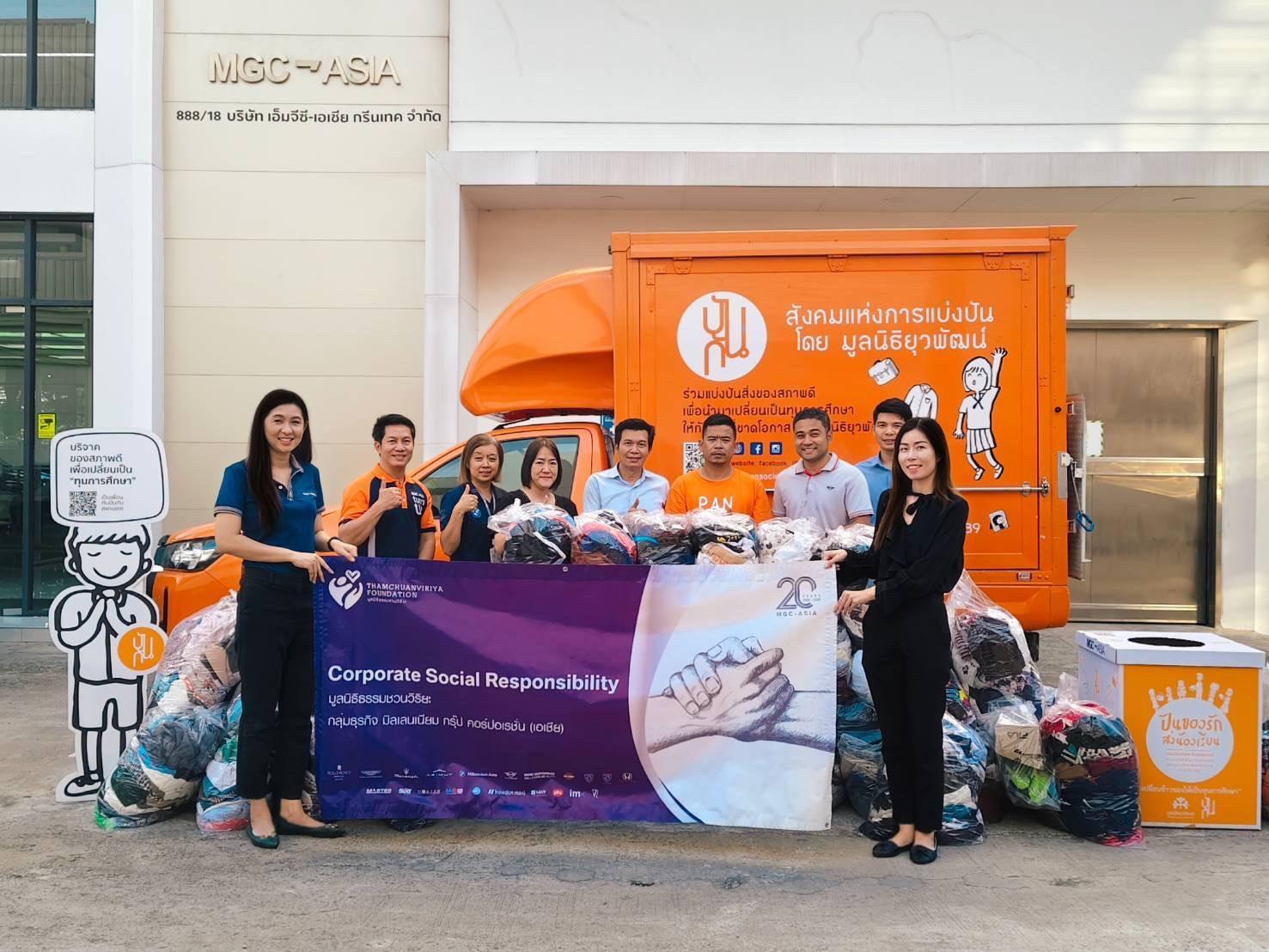
Performance Results
2024: A total of 556 donated items (saleable items) were collected, generating a value of THB 36,505, which was converted into 5 scholarships (THB 7,000 per scholarship).
2025: The donation period was extended through March 2026.
2) Project to Provide Supplies in Support of Educational Institution Activities and Nearby Communities
MGC-ASIA supported public benefit activities in surrounding areas by donating equipment and snacks to nearby schools and communities, such as Bangkok Sueksa School, Islam Santichon School, and the Wang Thonglang District Office, in support of National Children’s Day activities and other community initiatives, as appropriate.
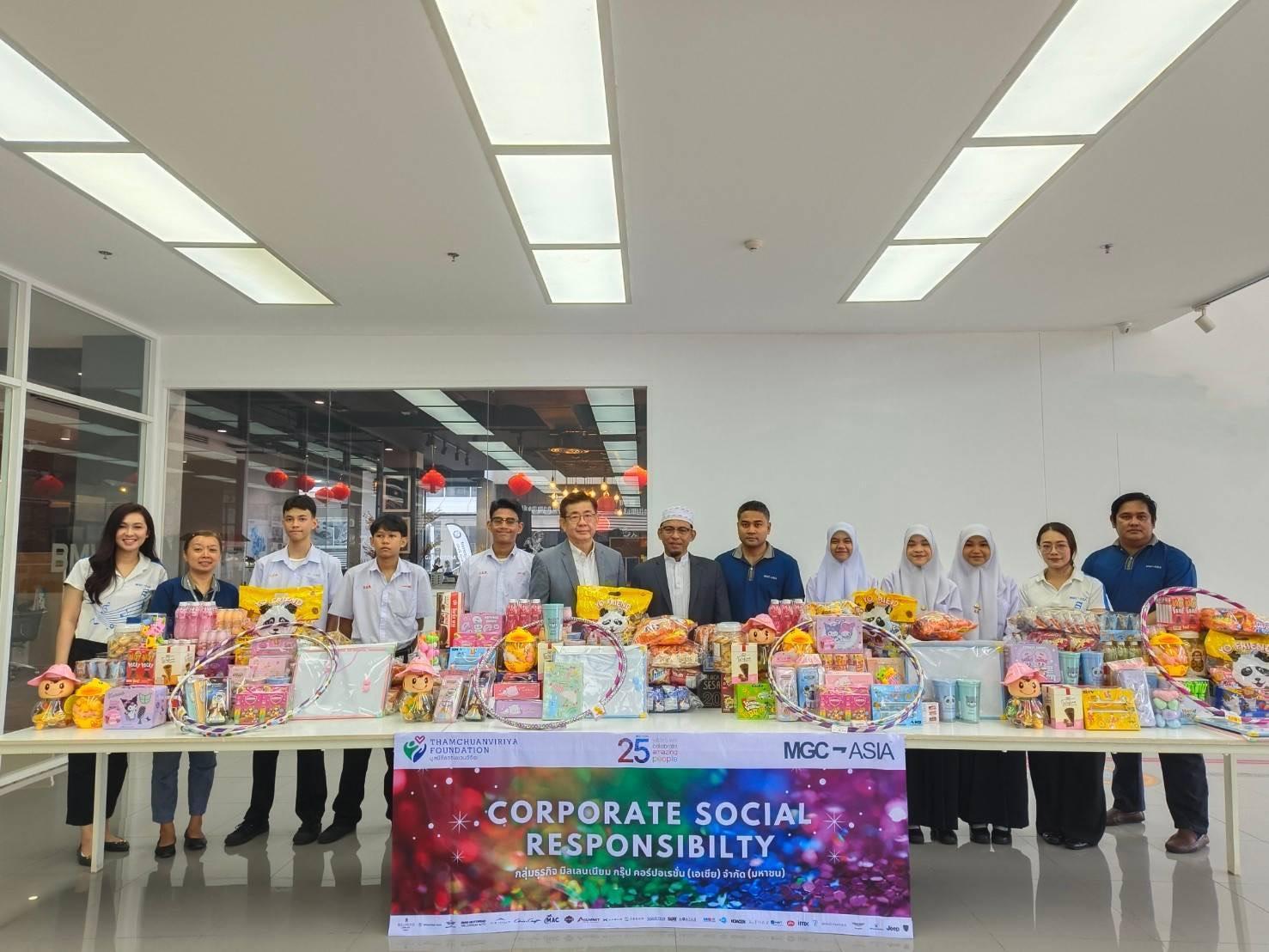
3) MGC-ASIA Management Team Begins the Year with Positive Energy and Giving
MGC-ASIA encourages the beginning of each year through activities centered on sharing and giving. These included annual merit-making activities at showrooms, the provision of rehabilitation funding to Tessaban 2 School (Baan Hat Yai), the donation of sports equipment, participation in repainting school buildings, and the reuse of discarded tires to improve the school landscape. These activities reflected the Company’s commitment to social contribution and community support through collaborative action.
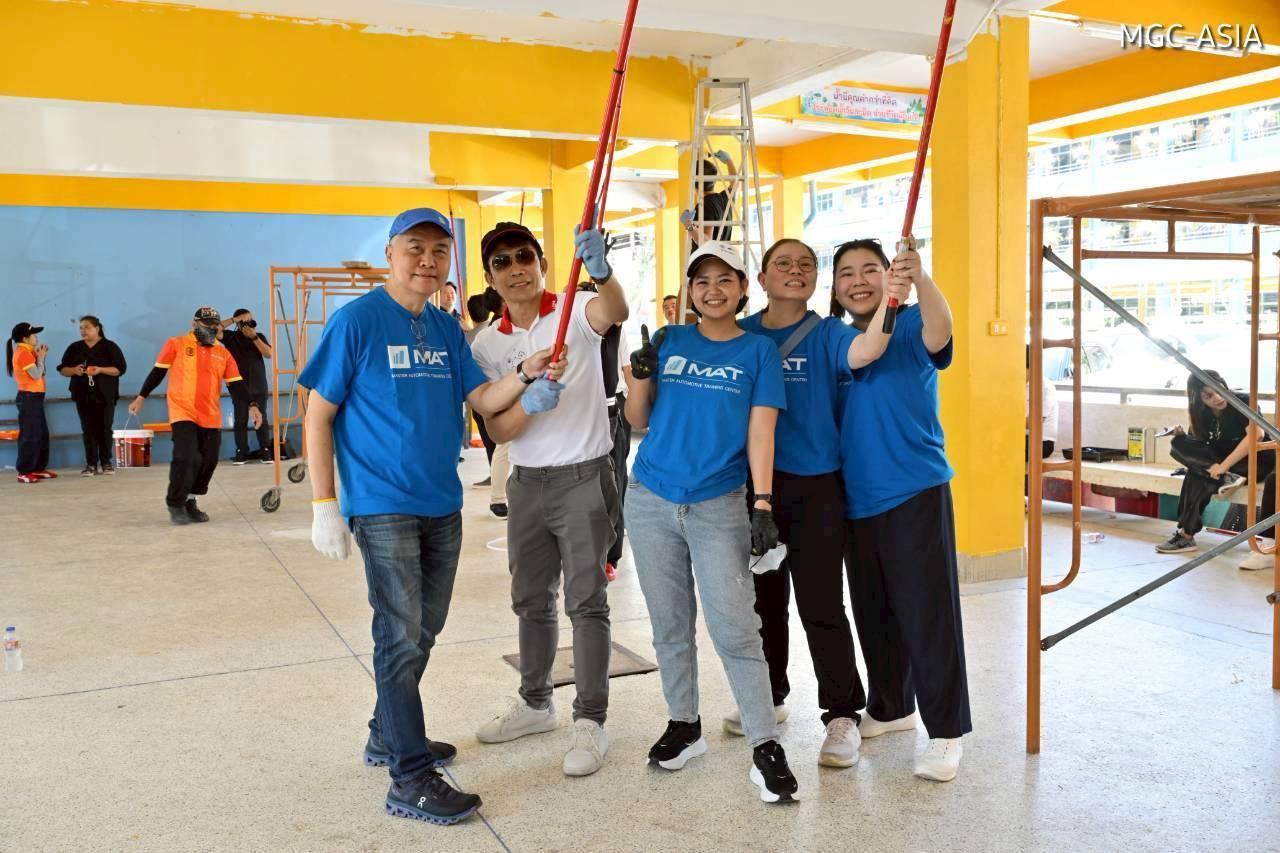
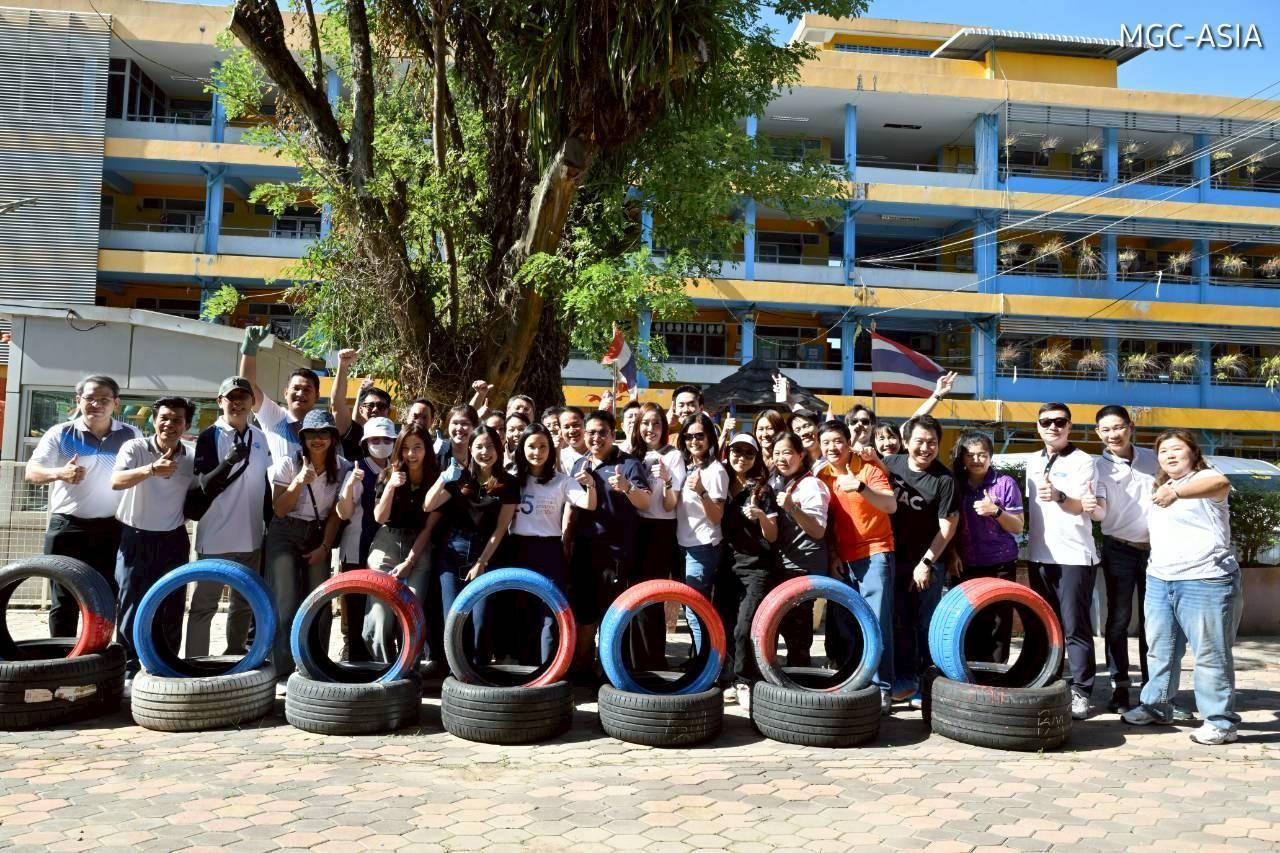
4) Social Contribution Activity: Donation and Area Development for Baan Lamu School, Chumphon Province
Millennium Auto Group Co., Ltd., under MGC-ASIA, led BMW Motorrad customers in participating in a social contribution activity together with the BMW Motorcycle Club (Thailand South) and business partners, such as Wang Prom Herbal Inhaler and Arabus Coffee. The group traveled to Baan Lamu School, Na Kratam Subdistrict, Tha Sae District, Chumphon Province, to support the development of the school and its surrounding area.
Key Contributions
Donated a total of THB 100,000 to support school development.
Supported area improvements, installation of floodlights for the football field, and donation of new dining tables and chairs.
5) Social Contribution Activity: Donation of Unused Tires for Playground Landscape Improvement
MGC-ASIA, in collaboration with the Thamchaunviriya Foundation and affiliated brands including Rolls-Royce, Azimut Yachts, and Chris-Craft, as well as partner brands Aston Martin and Maserati, donated unused tires for use in improving the playground landscape within the Department of Military Services, Royal Thai Armed Forces Headquarters. This initiative helped create a joyful and creative space for children while turning unused materials into beneficial community resources.
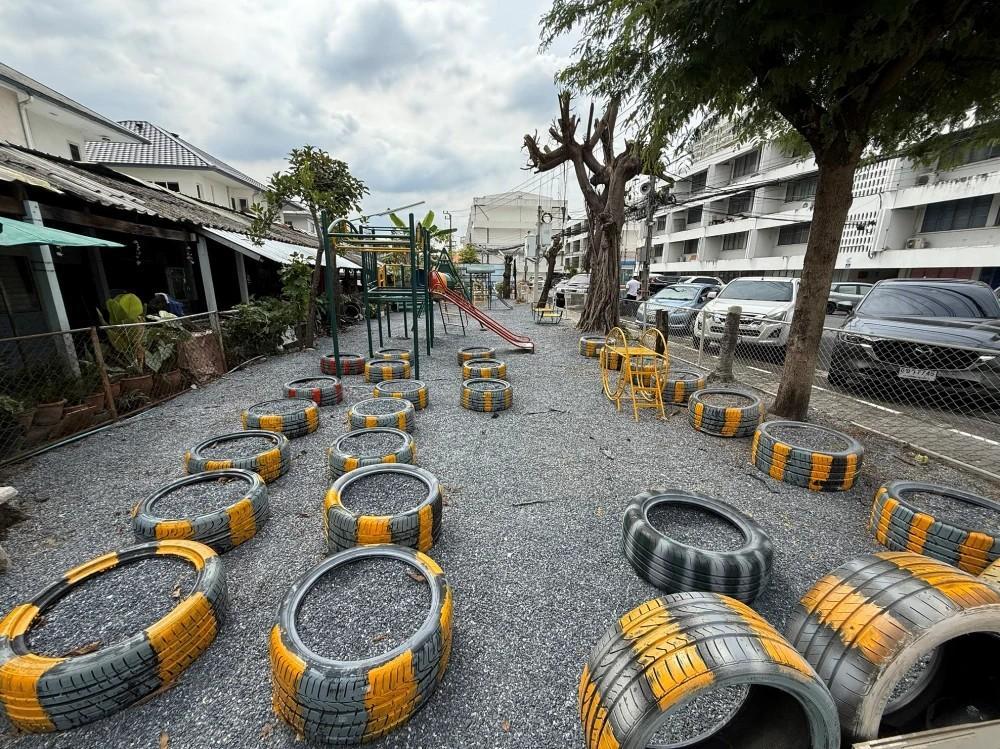
6) Donation of Relief Supplies for Earthquake Victims
MGC-ASIA, together with SIXT Rent a Car Thailand, XPENG Thailand, and the Thamchaunviriya Foundation, donated 4,000 blankets through the Embassy of the Republic of the Union of Myanmar in Thailand to support people affected by the major earthquake in areas such as Sagaing Region, Mandalay Region, Magway Region, and the northeastern part of Shan State, Myanmar. This initiative represented a continued act of compassion and shared support, carried out at the Embassy of Myanmar in Bangkok.
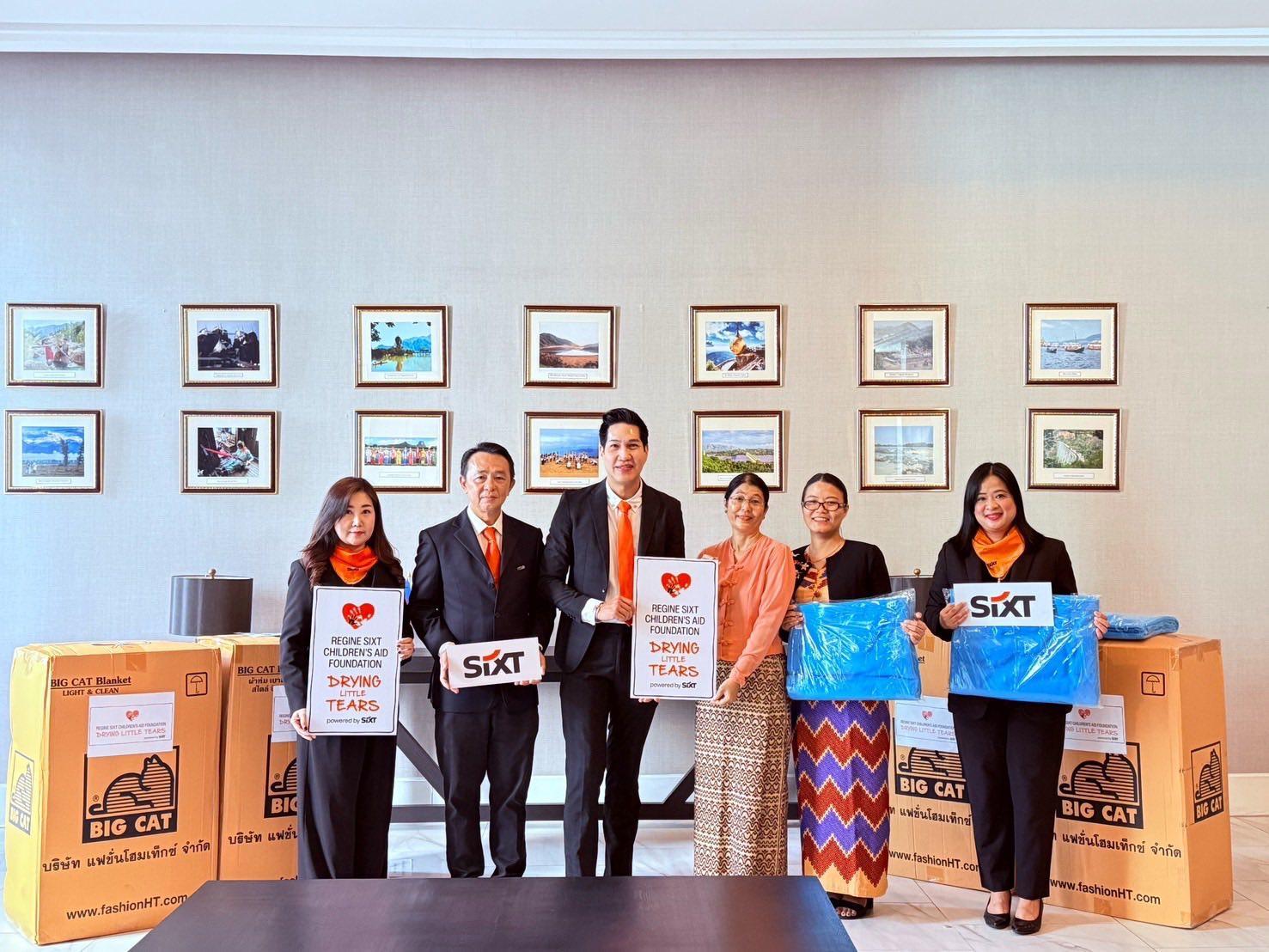
7) Donation of 1,000 Unused Tires to Support Missions Along the Thai-Cambodian Border
Master Motor Services (Thailand) Co., Ltd., under MGC-ASIA, together with the Thamchaunviriya Foundation, donated a total of 1,000 unused tires to support the operations of personnel stationed in frontline border areas, comprising: 600 tires delivered to the Suranaree Task Force, Surin Province 400 tires delivered through Dom Pradit Subdistrict Administrative Organization, Nam Yuen District, Ubon Ratchathani Province, for coordination with Ranger Company 2308
8) Project to Deliver Care and Assistance to Flood Victims in Hat Yai District
In 2025, MGC-ASIA, together with the Thamchaunviriya Foundation, supported flood relief efforts in Hat Yai by providing both equipment and assistance for employees and local communities. Support included flat-bottom motorboats with drivers, 24 life jackets, washing machines, relief bags, and clothing. In addition, a BMW showroom was opened as a temporary relief and shelter center, meals were provided during the flooding period, and staff from headquarters were deployed to support on-site operations. The Company also provided additional welfare support to employees at the Hat Yai branch through Lotus spending vouchers.
9) Thai People Care for One Another” Project in Support of Flood Victims in Songkhla Province (Hat Yai)
The Company donated relief items to help ease hardship among flood victims, including: General clothing:
124 shirts, 58 pairs of trousers, and 29 sets of children’s clothing
New/specialized clothing: a total of 365 sets, such as yellow shirts, sportswear, and technician uniforms
Other items: 30 commemoratives 25th anniversary shirts, suits, suitcases, and clothing donated by the Group CEO
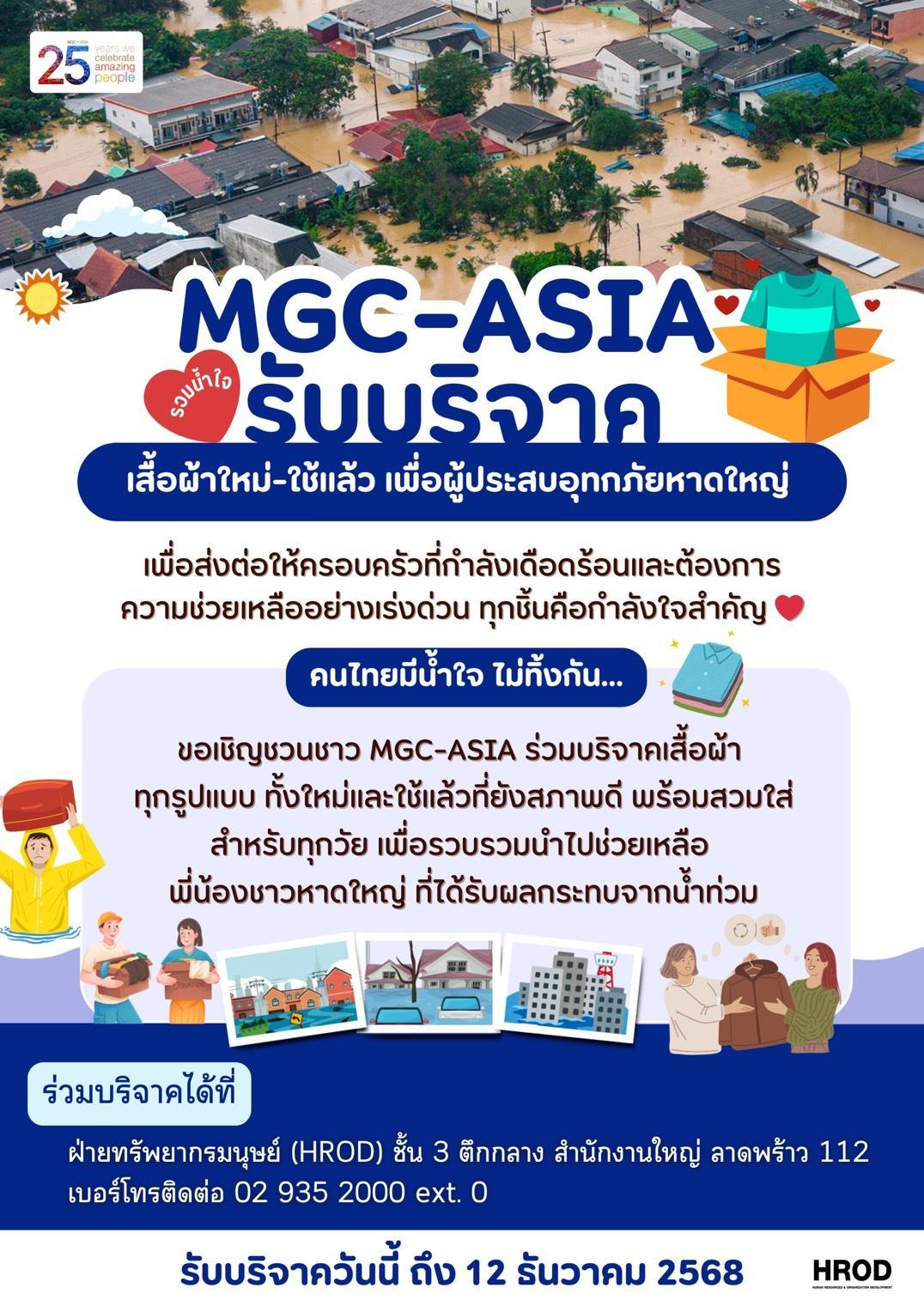
10) MGC-ASIA Project in Collaboration with the National Blood Centre, Thai Red Cross Society
The Company continuously promotes a culture of blood donation by organizing quarterly blood donation activities to support the public healthcare system and patient assistance through the participation and generosity of employees.
Quarter | 2023 No. of Employees (Persons) | 2023 Blood Volume Donated (cc) | 2024 No. of Employees (Persons) | 2024 Blood Volume Donated (cc) | 2025 No. of Employees (Persons) | 2025 Blood Volume Donated (cc) |
|---|---|---|---|---|---|---|
Q1 | 36 | 16,200 | 31 | 14,000 | 40 | 18,000 |
Q2 | 50 | 22,500 | 28 | 12,800 | 39 | 17,550 |
Q3 | 40 | 18,000 | 33 | 14,800 | 32 | 14,400 |
Q4 | 45 | 20,250 | 51 | 22,950 | 34 | 15,300 |
Total | 171 | 76,950 | 143 | 64,550 | 145 | 65,250 |
Note: One person donates 450 cubic centimeters of blood per donation.
In 2025, the Company conducted a community satisfaction assessment covering the communities surrounding its operational area at the head office, with an overall satisfaction score of 86.7%. The Company has also established a plan to expand the satisfaction survey to additional operating areas of its subsidiaries in the following year, in order to ensure broader monitoring and more comprehensive management of community relationships.
Supplier Engagement for Sustainable Business Operations and ESG-Based Supplier Selection Criteria
The Company recognizes the importance of suppliers within the value chain as key stakeholders contributing to sustainable business operations. The Company therefore aims to promote collaboration with suppliers under Environmental, Social, and Governance (ESG) principles in order to elevate business practices in alignment with the Company’s sustainability approach.The Company has established guidelines and criteria for sustainable supplier management, covering key aspects as follows:
1. Establishment of ESG-based Supplier Selection Criteria (ESG Criteria) The Company has defined criteria and guidelines for supplier selection, taking into consideration ESG factors to ensure that suppliers operate responsibly, including:
Compliance with labor laws and relevant labor standards
Respect for and protection of human rights
Appropriate environmental management
2. ESG-based Supplier Evaluation and Selection
The Company incorporates sustainability criteria into the new supplier selection process by requiring suppliers to complete an ESG Self-Declaration as part of the evaluation. This assessment covers key areas, including:
Products and services
Business operations
Environmental and social aspects
In 2025, the Company continued to promote supplier engagement, with a total of 211 new suppliers acknowledging and signing the Company’s sustainable supplier selection guidelines and ESG criteria, supporting responsible supply chain management.
Law Violation Incidents
Law Violation Incidents
| Metric | Current Year | Previous Year | Two Years Ago |
|---|---|---|---|
| The total number of cases or incidents of significant violations of laws or regulations regarding social and human rights (Cases) | 0 | 0 | 0 |
| The total number of cases or incidents that cause significant labor disputes (Cases) | 0 | 0 | 0 |
| The total number of cases or complaints related to consumer rights violations (Cases) | 0 | 0 | 0 |
| The total number of cases or complaints related to partner rights violations (Cases) | 0 | 0 | 0 |
| The total number of cases or incidents that cause disputes with the community/society (Cases) | 0 | 0 | 0 |
| The total number of cases or incidents related to cyber security or customer data breaches (Cases) | 0 | 0 | 0 |
| The total number of cases or incidents related to safety and occupational health at work (Cases) | 0 | 0 | 0 |